Category: Industry Insights

How ServiceTitan Drove Unprecedented Customer Adoption and Growth with Embedded Payments

Author: Ershad Jamil former Chief Growth Officer of ServiceTitan

From the initial wave of businesses collecting payments through e-commerce sites to the current approach to embed payments into software platforms, if you’re leading a Vertical Software as a Service business (VSaaS), there’s no doubt you’ve started to think about the role payments play across your entire business lifecycle.  In fact, I was in the same shoes in 2015 when I began exploring payments for ServiceTitan.

In 2015, ServiceTitan, an all in-one-platform for home contractors, referred their customers seeking payments to a large payments processor.  This integration required customers  to onboard through the third party payment processor – leaving a disjointed customer experience in which the customer would bounce from the ServiceTitan app to the payment provider.

In addition, the ServiceTitan customer teams were focused on leading the software implementation, not the payment integration.  This led to onboarding bottlenecks for customers using the payment integration. Most of the customers did not have team members dedicated to payments and they struggled to understand why certain documentation, especially sensitive financial statements from contractors, was necessary.  This back and forth could lead to 2-3 month gaps in the onboarding – with little visibility between ServiceTitan and the payments provider.

While only 10-20% of ServiceTitan customers were using the payments integration, I believed that more customers would leverage payments—especially if the payments experience looked a little different. When surveying customers about their experience with the integration, they shared frustrations with the sales and onboarding process. Additionally, the approach to sales, which emphasized “match or beat your pricing,” often resulted in lower take rates for ServiceTitan, even though the product was delivering significant value that exceeded the quoted pricing as a VSaaS business, I knew it was critical to streamline business operations for our customers—and addressing the friction in our payments integration strategy was a key opportunity. By exploring different levers in payments—such as fully embedding payments into our platform and structuring pricing to align better with customer needs—embedded payments could become just as critical to our software and as much of a revenue driver as other core platform features. Allowing home service contractors to take payments directly through a web or mobile app would deliver a significant value add.

In review of the business case with ServiceTitan’s co-founders, head of finance, head of operations and developers, three primary benefits for why to embed payments came to the forefront:

  1. Improved customer experience – Our customers, home and commercial contractors, would be able to accept their customers payments via a web or mobile app, reconcile invoices & payments, view data/analytics via reporting, and more – allowing payments to be a fully integrated experience through the ServiceTitan platform. Not only would the  ‘all in one solution’ provide a better experience for the customer, but also a great opportunity to reduce onboarding time and friction as well as improve retention for our product.
  2. Simplified end customer experience – We understood that if the end customer (a homeowner, for example) experiences a great payment experience (i.e., tapping your phone via Apple Pay, taking a picture of a check via a mobile phone, etc.), it reflects well on the business (contractor) and in the end, reflects well on the software that business is using. Bringing delight throughout the entire process would increase utilization and satisfaction.
  3. Revenue expansion – Taking on more of the work to sell, onboard and support customers via our own integration with a payments partner, we could take a larger revenue share and offer flexible pricing structures that meet customers’ business models.

By 2017, we launched ServiceTitan Payments and it provided a meaningful impact to the company from a revenue and retention perspective.  Within three years, the vast majority of ServiceTitan customers were using the embedded payments offering.

It should be no surprise that other major VSaaS platforms like Mindbody and Toast have also launched embedded payments. There are also so many features that a VSaaS business could benefit from in addition to embedded payments like storing credit cards on file for recurring billing, ability to process a refund in the app, eliminating manual reconciliation, to help their customers streamline their operations.  To increase product stickiness and long term growth, embedded payments is a great starting point.

With support from Payabli I’m going to write a series of articles to help other vSaaS operators to think strategically to optimize their Payments business and avoid many of the pitfalls I encountered along my journey in building ServiceTitan Payments. Stay tuned for more content on driving payments adoption, maximizing payments margin potential, bundling additional fintech products and more.

View the full conversation with Joseph Elias Phillips and I below 👇

Breaking Down PCI DSS 4.0 Requirements: How SaaS Platforms Can Achieve Compliance by the March 2025 Deadline

Credit card theft and misuse are growing in both volume and sophistication. Recent reports suggest that cases of credit card fraud have doubled in volume in the last five years.

In response to the shifting nature of e-commerce, the Payment Card Industry Security Standards Council (PCI SSC) announced the PCI Data Security Standard (DSS) 4.0 in March 2022.

The council gave businesses a three-year deadline to prepare for and implement the new standard. As March 2025 grows closer, SaaS platforms must comply with a raft of new PCI DSS 4.0 requirements or face stiff consequences.

What is PCI DSS 4.0?

PCI DSS 4.0 is the latest iteration of the Payment Card Industry Data Security Standard, an updated set of requirements businesses must follow when handling credit card information.

The standard aims to protect customers’ payment data from theft and fraud and ensures businesses that accept, process, store, or transmit credit card information maintain a safe, secure environment.

How does PCI DSS 4.0 affect SaaS providers?

The new PCI DSS 4.0 requirements include changes that directly impact SaaS providers. Let’s break down some of the reasons below.

Expanded scope: The PCI DSS 3.2.1 provided rulings for payment processors. However, the 4.0 version has broadened its scope to include any SaaS providers that store, process, or transmit cardholder data. Even if you don’t directly process payments, you must comply with the new standards. Within the expanded scope, additional cardholder PII info is required.

More robust password requirements: Access to cardholder data environments (CDEs) now requires multi-factor authentication. These changes affect both remote and onsite teams. Password complexity requirements have also become more stringent.

You can read more about the different authentication options in this SSC supplement.

Stronger security controls: While much depends on your type of business and the volume of transactions you process, mechanisms like DMARC, SPF, and DKIM are required to protect against phishing attacks as part of the PCI DSS assessment. Additionally, businesses must commit to testing their security systems more frequently.

Risk assessment: The new standard also mandates that SaaS providers must perform regular risk assessments and proactively identify potential vulnerabilities. What’s more, the new regulations also require businesses to outline and apply security controls to mitigate or remedy adverse findings of these risk assessments.

Customization: While the core 12 PCI DSS requirements are non-negotiable, there is room for a more customized approach to suit the needs of their specific risk environment.

Implications for SaaS providers

Meeting the new PCI DSS 4.0 standards will have several implications for SaaS businesses. Some of the topline impacts include:

  • Increased compliance costs: Meeting these new requirements means many SaaS providers will need to invest in new tech, personnel, and processes. These investments will result in a rise in compliance costs for many businesses.
  • More security monitoring: The standards’ increased emphasis on monitoring and assessing risks means SaaS teams will need to budget for more time on security processes.
  • Workflow adjustments: Stronger authentication and security controls could cause disruptions in existing workflow processes for many SaaS providers.
  • User experience: On the user side, some SaaS end users might face extra steps when paying for products. However, disruptions should be minimal and more than justifiable when weighted against security benefits.
  • Third-party risk management: SaaS providers must also ensure their third-party vendors or partners comply with PCI DSS 4.0. That means tighter contractual agreements, more ongoing monitoring, and enhanced due diligence in vendor selection and assessments.

What happens if SaaS businesses don’t comply with PCI DSS 4.0?

Non-compliance with PCI DSS 4.0 is not an option. Some of the penalties and adverse effects that could result from ignoring the March 2025 deadline are detailed below.

Fines: SaaS companies that fail to comply with PCI DSS 4.0 could face stiff monthly fines of between $5,000 and $10,000. The precise amount depends on various factors, such as non-compliance severity, business size, and any holdups in remedying the situations.

Business disruptions: Failure to comply with the new standards can lead to catastrophic payment processing bans for SaaS businesses. Additionally, non-adherence could result in companies being placed on the MATCH List or Terminated Merchant File (TMF) and even the potential loss of contracts needed to continue accepting card payments.

Legal liabilities: Failure to comply could open up SaaS businesses to lawsuits from affected parties, defense costs, and settlements. Additionally, it could increase the likelihood of audits from bodies such as the FTC, which could result in additional financial penalties.

Data breaches: The new regulations were designed to reduce the likelihood and effect of data breaches. Organizations that do not meet these standards run the risk of expensive and reputation-shredding data breaches and loss of trust among their users.

Lost access to payment processing: While this downside is limited to the worst infractions, SaaS companies that do not comply with PCI DSS 4.0 could lose access to payment processing, which would constitute an existential risk.

Additionally, merchants operating under software platforms that fail to comply with PCI DSS 4.0 face significant financial, operational, and reputational risks similar to those outlined above.

How can SaaS providers prepare for the March 2025 deadline?

With the March 2025 deadline on the horizon, SaaS teams need to take action before it’s too late. Here are some actions that can ensure you’re ready.

  • Look at the PCI DSS 4.0 requirements and compare them to your current security practices. Identify what you must do to improve your security with these new standards.
  • Perform a comprehensive risk assessment to pinpoint your vulnerabilities and shortlist tasks for remediation.
  • Right now, PCI DSS 4.0 standards are thought of as best practices. However, implementing them now will ensure you’re ready for March 2025.
  • Update your security policies, procedures, and practices to align with PCI DSS 4.0.
  • Ensure that any third-party vendors and partners are compliant.
  • Ask a Qualified Security Assessor to audit your current setup and make recommendations toward compliance.

How Payabli Can Help?

Partnering with an experienced and reputable payment service provider like Payabli can help you navigate the complexities of PCI DSS 4.0 compliance. Here is how we can support your business.

  • Payabli handles the storage, processing, and transmission of cardholder data. SaaS businesses can significantly reduce their exposure to PCI DSS 4.0 compliance standards and broader security risks by allowing us to manage their payments.
  • Payabli replaces sensitive cardholder data with tokens, adding an extra security layer and mitigating data breaches.
  • Our payment processing infrastructure is already PCI DSS 4.0 compliant as well as featuring encryption, firewalls, intrusion detection, and regular security audits. We stay up to date on emerging security threats, best practices, and regulatory changes, allowing SaaS providers to remain compliant with PCI DSS 4.0.
  • Finally, and perhaps most importantly, we have a team of payment experts with deep experience in implementing and maintaining PCI DSS 4.0 compliance. Payabli can provide personalized guidance on how your SaaS organization can meet PCI DSS 4.0 standards, helping you understand and interpret the requirements and outline areas for improvement.

Through a mix of security document preparation, self-assessment questionnaires, and audit support, we’ll ensure your SaaS business meets PCI DSS 4.0 standards and avoids fines, security breaches, and loss of payment processing associated with non-compliance. In addition, we offer ongoing PCI support, helping to ease the burden of managing and maintaining compliance. This not only protects your SaaS business but also enhances your end-user customer experience by safeguarding their sensitive data.

Reach out today to see how we can help.


Builder Prime’s Transformation with Payabli – Powering Seamless Payments for the Home Improvement Industry

Revolutionizing Home Improvement: Builder Prime’s Vision

Founded in 2016 by Jonathan Weinberg, Builder Prime is bringing efficiency to specialty and replacement contractors and offering an all-in-one business management solution. This powerful platform integrates CRM, estimating, production management, invoicing, payments, and more. Oftentimes specialty and replacement contractors faced significant challenges in managing deposit payments and final payments at job completion. By offering streamlined, automated solutions, Builder Prime enables businesses to operate more efficiently, win more jobs, and grow, while delivering exceptional customer experiences from lead to referral.

Builder Prime’s journey began with Weinberg’s own home renovation experience in 2007. With a background in software and financial services, he identified inefficiencies in the contractor industry and decided to develop a solution that would simplify the complexities of home improvement business operations. Today, Builder Prime serves a wide range of contractors, including specialty and replacement contractors, and is trusted by hundreds of home improvement businesses.

The Challenge: From Delayed Payments and Site Revisits to an All-in-One Solution

From the early days of Builder Prime, payments were top of mind for Weinberg and his team. As they streamlined the sales process, including contracts and e-signatures, they realized a major inefficiency in collecting payments. Customers relied heavily on manual, paper-based invoicing and payment methods such as paper checks or in-person credit card swipes. This not only delayed payments but also required contractors to physically revisit customer homes to collect deposits, adding time and travel costs.

In particular, specialty and replacement contractors faced significant challenges in managing deposit payments and final payments at job completion. The lack of integration between payments and the rest of Builder Prime’s automated workflow created friction in an otherwise efficient system, impacting both contractor operations and customer satisfaction.

Why Payabli?: The Game-Changer for Embedded Payments

Builder Prime initially partnered with a popular payment solution for software startups. However, they quickly encountered limitations with the provider’s basic package, particularly around pricing flexibility, risk management, and customer support. Additionally, their fee structures led to reconciliation issues for Builder Prime’s customers, as fees were deducted without transparency, making it difficult for customers to reconcile payments accurately.

Builder Prime needed a new payment solution—one that would provide visibility into fees, offer more robust support, and allow them to grow without taking on undue risk. After evaluating their options, they chose Payabli for its significant domain expertise in the field services vertical, trusted advisory, technical flexibility, and scalable economics offering that grows alongside Builder Prime.

Payabli not only offered a seamless integration process but also provided the level of trust and transparency Builder Prime needed. Builder Prime was able to customize pricing and fees, gaining greater control over their payments strategy and revenue. With a shared background in SaaS, Payabli’s team was able to deliver tailored solutions, including revenue-sharing opportunities and dedicated support and expert payment guidance around PCI compliance and chargebacks. Builder Prime’s decision to partner with Payabli was driven by the people behind the platform and the potential for a mutually beneficial relationship.

Flexibility drives 1000% growth

With the transparency and control Payabli provides, Builder Prime can now offer flexible pricing models from Flat Rate, Interchange Plus and Pass-through models that allow contractors to compliantly pass credit card fees onto customers or offer cost-effective ACH options. This flexibility has become a compelling selling point for Builder Prime’s customers.

Since implementing Payabli in 2021, Builder Prime has seen impressive growth, with payment volume increasing by 1000%. The payment integration has not only enhanced customer retention but has also become an integral feature that drives the overall user experience. Today, nearly half of Builder Prime’s users rely on the payment system, and the percentage continues to grow.

From the beginning, Payabli’s customer support and onboarding experience stood out. The integration process was fast, taking only a few weeks, and Payabli’s team provided real-time support, even setting up a dedicated Slack channel for quick access to engineers for technical questions. Payabli’s product continues to evolve and Builder Prime continues to enhance their payments offering as Payabli adds new functionality and products.

Payabli has helped Builder Prime deliver a superior customer experience by simplifying the payment process.

Additionally, Payabli has become a meaningful part of Builder Prime’s Business Model, helping boost business growth and enabling the company to confidently offer a solution that meets the needs of their industry.

Looking Ahead: Continued Innovation for Builder Prime Payments

Looking to the future, Builder Prime and Payabli’s partnership will continue to evolve. With plans to implement additional features such as Apple Pay, Google Pay, and mobile check capture, Builder Prime aims to expand their payment capabilities further. Moreover, Payabli’s sophisticated payables solution will allow contractors not only to accept payments from customers but also to manage vendor and subcontractor payments—closing the loop on a fully integrated financial system.

Payabli has proven to be more than just a payments provider for Builder Prime—it’s a trusted partner driving innovation, growth, and efficiency. Together, they’ve transformed Builder Prime’s offering, delivering a seamless, integrated payment experience that meets the unique needs of home improvement contractors.

This partnership isn’t just about payments—it’s about creating lasting value for contractors, customers, and the home improvement industry as a whole. And with Payabli, Builder Prime is leading the charge.

Payment Rails: What Are They, Their Evolution, and How They Work

Commerce has evolved over millennia, and today, online businesses depend on electronic transactions to drive their operations. Customers expect the convenience of instant payments, which, while seeming magical, rely on complex systems behind the scenes. This article will explain what payment rails are, why they are important, and how they work to move money securely.

What Are Payment Rails?

Let’s start from the beginning – what exactly are payment rails? As the name implies, payment rails are similar to the physical rails that trains run on to transport goods over land. But instead of carrying physical items, payment rails transport money and data. Payment rails are the infrastructure and technology platforms that enable the movement of funds between payer and payee, facilitating transactions in the financial ecosystem. Think of them as the “tracks” on which payment information travels, similar to how physical railroads move goods and people.

These exchanges can happen between banks, businesses, and individuals. As such, they have become a crucial component of the financial ecosystem.

A Brief History of Payment Rails (1950-2010s)

You could argue that payment rails started with the first checks. These paper documents were like early versions of electronic payments and allowed customers to pay merchants without having the legal tender on hand. But it wasn’t until computers and electronic networks came along that payment rails took off.

In 1958, Bank of America introduced the first general-purpose credit card, the “BankAmericard,” marking the start of “card rails” and shifting payments from cash and checks to a credit-based system. This innovation evolved when BankAmericard became Visa in 1976, creating a global network that enabled cross-border payments and connected millions of merchants and cardholders.

About ten years after the launch of the BankAmericard, Automatic Clearing Houses (ACH) were introduced. ACH was developed as a solution to the growing need for efficient processing of large volumes of paper checks and electronic payments. The ACH network provided a way to move money between bank accounts electronically, facilitating transactions like direct deposit of payroll and automatic bill payments.

In 1978, SWIFT (Society for Worldwide Interbank Financial Telecommunication) revolutionized international finance by providing a standardized, secure messaging system for cross-border transactions. Before SWIFT, international payments were slow, costly, and error-prone due to the lack of a common protocol.

Then came the Internet, which completely transformed the payments landscape once again. The rise of the Internet in the late 1990s and early 2000s led to the emergence of Peer-to-Peer (P2P) networks, with PayPal being one of the most prominent examples. PayPal allows people to send and receive money digitally, bypassing traditional banks and payment methods.

Even traditional payment methods like checks have adapted to the digital age. With the advent of mobile banking, checks have received a modern update through mobile deposit features. Now, instead of visiting a bank or ATM to deposit a check, people can simply snap a photo of it with their smartphone and deposit it from anywhere.

In recent years, the development of real-time payments (RTP) has been a significant milestone in the U.S. payments landscape. Launched in 2017 by The Clearing House, RTP enables instantaneous transfers of funds between bank accounts, 24/7/365. Unlike traditional payment methods that could take days to process, RTP allows recipients to access funds immediately, even on weekends and holidays.

New payment technologies continue to evolve, with innovations like blockchain, digital wallets, contactless payments, biometric authentication, and AI pushing the boundaries of what’s possible. These advancements make transactions faster, safer, and more seamless, as the payments industry adapts to growing consumer expectations and technological capabilities in a digital-first world.

How Payment Rails Work

Payments can be categorized as push, pull, or a combination of both. Push payments offer control and are ideal for instant transfers, while pull payments are convenient for recurring bills and purchases. Systems like ACH provide versatile solutions for various business and personal finance needs.

  • Push Payments: In a push payment, the payer initiates the transaction by sending money directly to the recipient. A great example of this is Real-Time Payments (RTP). With RTP, the payer actively “pushes” funds from their bank account to the recipient’s account. This type of payment is usually instant, and the recipient has immediate access to the funds, even on weekends or holidays.
  • Pull Payments: On the other hand, pull payments work the opposite way. Here, the recipient or merchant initiates the transaction by requesting funds from the payer’s account. Credit cards are a common example of pull payments. When you make a purchase with a credit card, the merchant requests the amount owed from your credit card issuer, which then pulls the funds from your line of credit to pay the merchant.
  • Combination of Push and Pull: Some payment systems can operate as either a push or pull, or even a combination of both, depending on how they’re used. ACH (Automated Clearing House) is a great example of this flexibility. ACH can function as a push payment when you, for instance, initiate a direct deposit to pay your employees—sending money from your account to theirs. It can also work as a pull payment when a utility company automatically withdraws your bill payment from your account each month.

The Formula for Processing Payments

While different payment rails might use slightly different methods, most follow a similar process. Here are the main steps:

  • Initiation: The payment process starts when the payer authorizes the transfer of funds. That could mean swiping a debit card, signing a check, initiating a recurring payment, or logging into an online bank account and entering payment details.
  • Payment Creation: Once the payer approves the payment, a financial message with relevant transaction data is generated. It includes the amount to be paid, account numbers, and other information required to complete the transfer.
  • Processing: The payment message enters the payment network, which could be a card network like Visa or Mastercard or an ACH network. Here, a series of steps and checks ensure the transaction is valid and authorized.
  • Confirmation: This step occurs as soon as funds are guaranteed and the transaction is authorized. Confirmation messages are returned to the payer, payee, and other relevant parties, serving as proof that the payment went through.
  • Settlement & Reconciliation: Finally, the actual transfer of money occurs. This settlement process can happen instantly or not, depending on the type of payment rail. Once settled, accounts are reconciled and updated accordingly.

Types of Payment Rails

Now that we know what payment rails are, let’s look at the different types. We can group payment rails based on how they handle transactions, how fast they work, or what technology they use. Here are some of the leading payment rail systems in use today:

Automatic Clearing Houses (ACH)

ACH is a system that processes electronic payments in batches. It’s mainly used for direct paycheck deposits and automatic bill payments. In the US, ACH is overseen by NACHA (National Automated Clearing House Association).

One of the great things about ACH is that it’s affordable and perfect for recurring payments. If your paycheck gets deposited straight into your bank account every month, that’s probably through ACH. If you’re in the SaaS business and deal with ACH, check out our blog to learn more about ACH and ACH returns, how they work, and why they’re important.

Card Networks

Card networks like Visa, Mastercard, American Express, and Discover manage the infrastructure for secure and efficient card transactions. The process starts when a purchase is initiated, with transaction data sent through the network connecting the merchant’s bank (acquirer) and the cardholder’s bank (issuer). The issuer authorizes the transaction, verifying funds or credit, and once approved, the transaction is processed, transferring funds from the cardholder’s account to the merchant’s account.

Card Acceptance

Merchants can accept credit and debit cards as payment for invoices, goods, and services, expanding their customer base and streamlining their payment processes. Card payments can be processed online, by mail, over the phone, or using a physical point-of-sale device. Card details can also be stored for recurring payments, ensuring seamless transactions for subscription-based services or repeat purchases.

Additionally, merchants can leverage digital wallets to facilitate card payments, enhancing convenience for customers. Digital wallets enhance the security of card transactions by tokenizing and protecting card information. When a card is stored in a wallet, it is converted into a temporary virtual card at the time of purchase. This tokenization process ensures that the actual card details are never exposed during the transaction, reducing the risk of fraud.

Card Issuance

Card issuance allows individuals to obtain cards for making payments in person, online, or via mail/telephone orders. These cards come in various forms—credit, debit, prepaid, and gift cards—each serving different financial needs. Issued cards can be either virtual or physical, offering flexibility in how they are used. Additionally, cardholders benefit from purchase protection features, such as the ability to dispute unauthorized transactions, ensuring a fair and secure payment experience.

Interac

Since 1984, Interac has been Canada’s predominant payment network, linking financial institutions to process debit card payments at point-of-sale terminals and online. It also enables peer-to-peer money transfers through Interac e-Transfer, allowing account holders to send money using only an email address or mobile number, with SMS payments becoming particularly popular.

Domestic Wires

Domestic wires are a type of payment rail used to transfer money quickly and securely, typically for large-ticket items or transactions within a country. These transfers are instantaneous, making them ideal for situations where speed is crucial, such as high-value purchases or urgent payments. By leveraging established financial networks, domestic wires ensure that funds move efficiently between accounts, providing a reliable option for significant financial transactions.

Real-Time Payments and FedNow

This system, introduced by The Clearing House in 2017, revolutionizes payment processing by enabling real-time transactions with immediate fund availability, even on weekends and holidays. When a payer initiates a transaction through their bank’s online platform or app, funds are instantly transferred via the RTP network, allowing the recipient immediate access. Unlike traditional methods, RTP transactions are final and irrevocable, providing instant confirmation to both parties.

RTP Push and Requests for Payment

RTPs are initiated as a “push” of funds, meaning the payer actively sends money to the recipient, with no way to directly “pull” or debit funds from a payer’s account. Instead, businesses use a “Request for Payment” (RFP), which the payer must approve to process the payment. This method enhances security by ensuring payments require the payer’s explicit consent. RTPs provide instant access to funds, even on weekends.

FedNow

FedNow, an upcoming real-time payment service from the Federal Reserve, aims to enable instant transactions between banks 24/7/365. It will expand real-time payment access across the financial system, especially for smaller banks and credit unions, enhancing speed, efficiency, and accessibility for U.S. payments.

Payment Rails for SaaS Platforms

At Payabli, we like to say, “If you’re a software company, you’re a payment company.”

Every business, including SaaS companies, must handle payments and manage their entire lifecycle, from initiation to settlement. This includes processing sales, subscriptions, and paying bills for services like internet and vendors. By allowing users to manage these inflows and outflows in one place, you empower them to grow their business efficiently through your platform. Partnering with Payabli offers secure, fast, and convenient tools to support this growth. Here are some benefits:

Compliance & Security

In fintech and banking, navigating financial regulations and data security standards can be complex. Payment rails streamline compliance by transmitting payments through regulated networks that adhere to strict standards. Payabli complies with PCI Security Standards to ensure cardholder data is protected and NACHA standards to safeguard ACH transactions. This ensures that all sensitive payments are securely handled and compliant with all relevant regulations.

Speed

Payments once took weeks, causing delays and frustration. Now, payment rails enable transfers within hours or minutes. Time-sensitive SaaS companies benefit from faster settlements, improving cash flow visibility and decision-making. APIs offer instant payment requests, eliminating the wait for paper checks, while real-time status updates provide near-instant notifications when payments are funded or paid.

Customer Experience

The modern consumer and business expect fast, convenient online payment experiences with multiple options, from cards to mobile wallets. Payment rails help SaaS platforms meet these expectations by enabling payments through credit cards, debit cards, ACH transfers, and mobile wallets like Apple Pay or Google Pay. They also allow for easy payment processing via hosted payment pages or embedded checkout solutions. The result is improved customer satisfaction, loyalty, and increased referrals.

The Future of Payment Rails

Predicting the future of payment technology is challenging, but payment rails are likely to evolve in three key areas. First, payment rails change with technology; the rise of the Internet brought systems like PayPal and Stripe, and blockchain could lead to more decentralized rails. Second, AI can enhance payment processing by improving fraud detection and making transactions safer. Lastly, payment rails will increasingly integrate with other services like accounting, billing, and identity verification, creating a more holistic financial experience.

Get Started With Payabli

If you’re running a SaaS or platform business, the time is now to integrate compliant payment capabilities that help you scale globally. If you don’t, you risk falling behind your competitors.

Payabli offers the next-generation payments infrastructure to help software companies quickly embed world-class payments into their platform. We cover all aspects of payments: Pay In, Pay Out, and Pay Ops (we call these the 3Ps).

Book a demo with Payabli today to see how you can enable fast, secure payment acceptance through global payment rails with just a few lines of code.

Top 5 Considerations for SaaS Platforms Seeking a New Embedded Payments Provider

Embedded payments is a highly strategic and critical focus for modern software platforms. Companies like Toast, Mindbody, and ServiceTitan wrote the playbook on seamlessly integrating payment functionalities within their product to enhance user experience and drive massive revenue. As technology evolves, so do the options for embedded payment providers. Unlike the early SaaS pioneers that had to cobble together multiple legacy payment partners to execute their payments strategy,  more modern superior solutions have emerged to help software companies quickly and easily embed and monetize payments. Selecting the right provider is a crucial decision, with implications for your SaaS business’s profitability, security, and customer satisfaction. With numerous factors at play, careful consideration is essential to ensure a smooth transition and continued success in the competitive landscape of SaaS. 

In this blog, we will cover the top 5 considerations SaaS platforms should consider when deciding which embedded payments provider to partner with. Check out our free checklist at the end to keep these considerations handy during your decision process.

1. Integration Flexibility

One key consideration is the integration flexibility that the payment provider offers you and your platform. When choosing your next embedded payments provider, you’ll want optionality and a partner that can meet you where you are in your payments journey. If you have full company buy-in and are aggressively resourcing for your Payments Integration and In-House Payments Business, you’ll want a partner that offers robust APIs and dev tools coupled with expert solution engineering. If you’re in a bind with your existing provider and are looking to make a switch but are strapped for resources, you’ll want a partner that can provide tools, and support a crawl, walk, run approach. Maybe you’re focused on providing an Embedded Payables solution to your customers, but wouldn’t it be nice if you could monetize Payment Acceptance with the same provider in the future?

Here are a few questions your SaaS organization should consider around integration flexibility:

  • Does the payment provider offer flexibility with API-based integrations or pre-built integration paths and their respective benefits and limitations?
  • Do they accommodate any existing business operations, infrastructure, or workflows your SaaS platform currently operates on and provide the optionality to integrate seamlessly?
  • Do they give you the choice of a self-service or guided implementation process? On either path, you’ll want to seek an embedded payments provider that offers open lines of communication during the integration process to field any real-time questions or concerns that arise.

2. Scalability and Performance

When considering a new embedded payments provider for your SaaS platform, scalability and performance should be top of mind. Here are a few things to consider when thinking about scalability and performance measures with your next payment partner:

  • Do they address the scalability challenges associated with rapid growth, change management, and increased transaction volumes? Working with a payment provider that helps you navigate change from your existing provider while keeping your business operational is crucial. You want to work with a provider that understands the potential hiccups that may occur within this process. 
  • Do they explore the opportunities to enhance revenue within your existing business portfolio? For example, are they practicing things like cost analysis around payments? Are they performing residual analysis to optimize your portfolio for key payment components like payables and receivables?
  • How long does it take to enable your sub-merchants from start to finish? For example, seeking a provider that helps streamline client acquisition with key features such as bulk boarding, and automated underwriting to get your customers boarded and transacting as quickly and efficiently as possible. 
  • Do they offer a robust infrastructure capable of handling peak loads, and advanced & efficient boarding capabilities for your customers? Consider the reliability of key payment performance measures such as uptime, transaction speed, and bandwidth to ensure uninterrupted services.

3. Security and Compliance

As a SaaS platform considering a new payment provider, prioritizing top-notch security and compliance features is essential to safeguard your operations and customer data. So, what makes a provider secure and compliant? And how can you confidently choose a provider that will securely manage and process payments on behalf of your clients? 

Consider the following:

  • Does your payment provider abide by the rules and regulations established by the PCI Council and possess the relevant industry certifications verifying this? Do they educate and work with you to better understand the compliance rules and regulations? For example, do they engage around questionnaires and work with your end users to get all the information they need or do they leave them to your organization to handle independently?
  • Do they provide advanced risk monitoring, and fraud prevention tools, and educate you on them and exactly what they mean for your business?
  • What tools and resources are provided to you around the underwriting process to ensure legitimate businesses are the only ones that process transactions through your platform? How are they ensuring bad actors are not at play?

These measures ensure a secure and compliant payment environment, protecting both your SaaS business and its customers from potential risks.

4. Customer Support

Customer support is crucial for SaaS platforms choosing a new embedded payments provider because it ensures smooth implementation, onboarding, and ongoing management of payment processes. Working with a payment provider that offers reliable support helps address technical issues quickly, minimizes downtime, and assists with integration challenges. Strong customer support enhances user experience, fosters trust, and allows your  SaaS platform to focus on its core business activities.

Here are some key questions and considerations around customer support:

  • Can the payment provider offer top-level support consistently? Are they assessing your needs from the initial phases during pre-integration and do they take a guided approach offering you the support and solutions your platform needs post-integration?
  • If your team lacks the bandwidth or expertise in payments, does the payment provider offer designated individuals available to your team to assist in streamlining your platform’s payment processes, ensuring consistency and reliability? Their expertise can mitigate errors, reduce delays, and enhance the overall efficiency of financial operations.
  • What tools, technology, and resources does the payment provider offer to support your needs?

5. Cost and Pricing Transparency

You’ll want to work with a payment partner who guides you through the right cost and pricing structures that are easily understood and help drive revenue for your SaaS business. Here are a few key areas to consider when it comes to cost and pricing transparency:

  • Does the payment provider offer the payment expertise to educate you on the complexities of cost and pricing models for your payments business? Pricing with payments can be custom to your industry – does the payment provider guide you to price competitively to your specific SaaS market?
  • What level of exposure do you get to the true cost of transactions and how willing is your provider to engage with you on this topic? Are they walking you through key pricing and cost measures including transaction fees, or interchange rates, and ensuring you are optimizing your portfolio’s revenue potential? 
  • What tools, tech, and resources are you being offered? How can your payment provider work with your specific business model, and help you save money with things like surcharging, service fees, and convenience fees?

Conclusion

Choosing the right embedded payments provider is a pivotal decision for modern SaaS companies. This decision significantly impacts your business’s efficiency, security, and customer satisfaction. By carefully evaluating key factors, you can ensure a seamless integration process and maintain a competitive edge in the SaaS landscape while scaling and monetizing your payments business.

Download our free checklist to keep these considerations in mind. 

Looking to learn more? Schedule a demo with one of our experts today.

What is Payment Tokenization and How Can it Enhance Security for Your Software Business?

Security in payment transactions is crucial for software businesses, and payment tokenization offers an innovative solution to this challenge. As we mentioned in our previous blog, there are multiple types of tokenization including standard, multi-use, and network tokenization. Each can benefit a software business’s unique use case and play a crucial role in its payment strategy.

In this blog we take a step back to explore the fundamentals of payment tokenization, why it matters for software businesses, its role in safeguarding sensitive payment data, and its impact on transaction security. We also emphasize the significance of partnering with the right payment provider for seamless and secure token migrations, ensuring a smooth experience for software businesses and their customers.

What is Payment Tokenization?

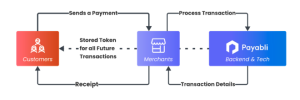
Payment tokenization involves replacing sensitive payment data, such as credit card numbers or bank account details, with randomly generated tokens. These tokens are used to facilitate secure transactions without exposing actual payment information. When a customer initiates a transaction, the payment system generates a token representing that information instead of transmitting their payment information, such as credit card or bank account details. This token is then passed through the payment process and stored in your business’s payment platform for future usage. If the token were intercepted, it would be rendered ineffective for use by unauthorized individuals or hackers, because it does not contain any sensitive data. The diagram below shows how payment tokens work for software businesses and their customers, and how the payment platforms’ backend tech, such as Payabli helps facilitate the payment tokenization process.


Why Does Payment Tokenization Matter for Software Business?

For software businesses, payment tokenization enhances security by reducing the risk of data breaches and fraud. It allows them to handle payment transactions without storing sensitive data, thus minimizing liability and compliance requirements. Additionally, payment tokenization enables software businesses to offer their customers a safer and more secure payment experience, which can enhance trust and loyalty.


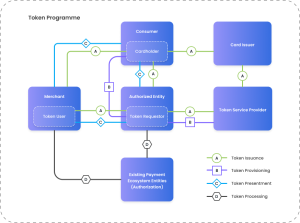
Graph from EMV Co

Exploring Different Types of Payment Tokens

There are three generally well-known forms for tokens:

Traditional Payment Tokens: These tokens are generated by replacing sensitive payment card details such as credit card numbers with a randomly generated string of characters. Many PCI-certified gateways and processors have enabled this functionality for many years. Since they are managed by your payment service provider, they tend to be the easiest and cheapest method to manage recurring payments.

Device Tokens: Device tokens are associated with specific devices, such as smartphones or smartwatches, and are used in mobile payment systems like Apple Pay, Google Pay, or Samsung Pay. Instead of using the primary account number, the payment system generates a unique token tied to the device’s secure element or software.

Network Tokens:  Unlike traditional tokens or device tokens, which are generated by merchants or payment processors, network tokens are created and managed by the card networks themselves. These tokens can be automatically updated since they are linked to the issuer and network if a change occurs.

Payment service providers like Payabli work with all three of these modalities to provide a convenient and secure payment processing experience for our software Partners.

That Seems Too Easy… What’s the Catch? And What Does This Mean For Software Businesses?

As mentioned above, traditional tokens are stored with either the gateway or processor. This means those platforms are managing the token lifecycle on behalf of customers and thus control the flow of that data. If a merchant or software provider (ISV) had to switch to a new gateway or processor, they would have to migrate all those saved tokens or even risk losing them all. Not having access to those tokens could have a massive impact on the merchant’s ability to process transactions and could affect their business operations overall.

There are two key factors that software platforms need in order to save their clients from this grief:

  1. Token Portability: When working with a provider that processes your payments, make sure you can migrate your tokens to a new provider.
  2. Token Migration: When you select a new payment service provider, it is important to ensure they can handle token migrations. Are they PCI-compliant and do they have a formal process to ingest the token information securely?

How does Payabli Do it Better?

Migrating a token may sound simple but it tends to be fraught with error. At Payabli, our team of payment experts has spent a significant amount of time normalizing data from the largest players in the payments space to ensure that migrations work smoothly for software businesses. You can see in the diagram below how the token migration process works within our technology ecosystem.


Moreover, we have automated the process, which often takes 2-3 weeks with other payment providers, down to a one-day process.

Here’s how we help facilitate the token migration process in a timely and secure manner:

  • We set secure file transfer protocol (SFTP) inboxes for our clients to deliver the information
  • We have built proprietary tools to standardize the formats from big payment service providers in the industry
  • We automatically decrypt the files and extract all the information
  • We create Payabli tokens for our merchants to be able to process transactions immediately

Conclusion

In conclusion, payment tokenization stands as a cornerstone of modern transaction security for software businesses, providing a robust shield against data breaches and unauthorized access. By adopting this technology, businesses not only safeguard sensitive payment data but also enhance the trust and confidence of their customers. Partnering with the right payment provider, such as Payabli, further amplifies these benefits through efficient token migrations and management, ensuring that the payment process remains seamless and secure. Payabli not only simplifies compliance with PCI standards but also equips businesses with the tools necessary for handling complex token migrations effectively. Therefore, embracing payment tokenization is not just about adopting new technology—it’s about investing in the future of secure, reliable, and customer-centric digital transactions.

Interested in learning more? Our team of payment experts would love to chat. Schedule a demo here.


ACH & ACH Returns: Everything Your SaaS Business Needs to Know

In the dynamic landscape of digital transactions, it’s crucial for businesses, especially Software as a Service (SaaS) companies, to stay abreast of various payment methods and their associated processes. One payment method that holds significant importance is Automated Clearing House (ACH) transactions.

Understanding what ACH is, how ACH works, as well as subsequent processes like ACH returns is fundamental for SaaS businesses to efficiently manage their finances and maintain customer satisfaction.

What is ACH?

ACH (Automated Clearing House) is a network in the United States for electronic payments and transfers between bank accounts, facilitating transactions such as consumer transactions, direct deposits, and bill payments. It offers a more efficient and cost-effective alternative to traditional paper-based methods like checks.

How does ACH Work?

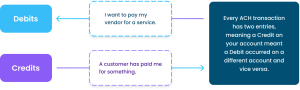
The ACH rail supports pushing and pulling funds from a US Bank Account. This means it can be used for purchases, payroll, and pretty much any use case as long as you have an originating and receiving bank account on either side of the request. See the diagram below.


What is an ACH Return?

An ACH return is a process where an ACH transaction is sent back to the originating bank by the receiving bank. There are several reasons why an ACH transaction may be returned, including insufficient funds, invalid account numbers, incorrect information, or issues with the account holder’s authorization. When a transaction is returned, the funds are not transferred and the payment is considered unsuccessful. It is important for businesses to understand with ACH returns that just because you set up a payment, doesn’t mean it is completed.

  • What is the Flow of the ACH Return Once It Has Been Initiated? (AKA how do ACH returns happen?)


  • Once initiated and depending on the return code, a return can take 2 banking days to up to 60 calendar days to process.

Why ACH Returns Matter for SaaS Businesses?

With ACH returns, the RDFI is responsible for initiating the return entry or the return for the total amount of the original payment (partial returns are not permitted).

ACH returns not only incur fees and lose revenue for merchants but also endanger a merchant’s ability to use ACH payments. If a merchant incurs too many ACH returns, their ability to use the ACH network can be revoked altogether.

There are other implications around ACH Returns for SaaS businesses, including:

Cash Flow Management: ACH returns can disrupt cash flow for SaaS businesses, especially those operating on subscription-based models. Failed payments mean delayed revenue, which can impact budgeting, forecasting, and overall financial stability.

Customer Experience: Payment failures can result in customer dissatisfaction and churn. For SaaS businesses, where customer retention is paramount, failed transactions due to ACH returns can damage relationships and erode trust. Customers expect seamless payment experiences, and frequent returns can tarnish a company’s reputation.

Compliance and Risk Mitigation: Understanding ACH regulations and compliance requirements is crucial for SaaS businesses to mitigate risk and avoid potential penalties. Non-compliance with ACH rules can lead to fines and legal consequences. By proactively managing ACH returns and adhering to industry standards, businesses can reduce compliance risks.

Operational Efficiency: A high volume of ACH returns can strain operational resources as businesses need to investigate and resolve payment issues promptly. Implementing efficient processes and leveraging the right payment solutions for ACH management can streamline operations and reduce the administrative burden associated with returns.

How Can SaaS Businesses Address ACH Returns?

Partnering with the Right Payment Provider: Utilize a payment provider that offers robust ACH processing capabilities and built-in features for managing returns. These platforms often provide monitoring, reporting, and automated retry mechanisms to help minimize returns.

Data Verification and Validation: Implement account verification processes to ensure the accuracy of customer information before initiating ACH transactions. Validating account details can reduce the likelihood of returns due to incorrect or incomplete data.

Communication and Notification: Maintain transparent communication with customers regarding payment failures and ACH returns. Promptly notify customers of any issues and provide clear instructions for resolving payment discrepancies to mitigate dissatisfaction and preserve relationships.

Risk Assessment and Fraud Prevention: Implement risk assessment protocols to identify and mitigate potential fraud risks associated with ACH transactions. Utilize fraud detection tools and monitoring systems to detect suspicious activity and prevent unauthorized transactions.

In conclusion, ACH transactions and ACH returns play a significant role in the payment ecosystem, particularly for SaaS businesses reliant on recurring revenue streams. By understanding the fundamentals of ACH, actively managing returns, and implementing best practices for ACH processing for PayIn, SaaS companies can enhance cash flow, preserve customer relationships, and ensure compliance with regulatory requirements, ultimately driving long-term success in the digital economy. There are other implications as it relates to ACH for PayOut, which we will cover in more detail in a future blog post.

Looking to learn more about how Payabli helps SaaS companies like yours better handle ACH and ACH Returns? Schedule some time to speak with one of our Payment Experts.


The 3Ps to scaling your SaaS Payments Business

It’s a pretty awesome time to be a vertical SaaS company. SaaS has always been attractive given the recurring and predictable nature of SaaS revenue, the opportunity for category leaders to command dominant positions in their given verticals, and the plethora of ways to monetize one’s platform when you become the mission critical system of record for your installed client base. Now more than ever though, SaaS companies have so many levers they can pull to diversify their business model and unlock lucrative new revenue streams. Insert Payments Monetization. As most savvy SaaS operators already know, there’s a ground swell of TRILLIONS of dollars in payments volume and hence hundreds of billions in payments revenue, migrating from the traditional ISOs / MSPs and legacy means of distribution to SaaS companies across every vertical imaginable and unlocking massive new revenue opportunities for them. 

We were inspired to create Payabli after helping architect ServiceTitan’s Payments offering. Whereas ST had the resources to hire a large team, stitch together integrations to various disparate APIs, and manually manage a complex system, we believed the next generation of Service Titans, Mindbodys, and Toasts who will make Payments a core part of their business model need something different. We believe they need a modern, “API First” Payments Stack that seamlessly ties together the key vectors of managing and scaling a SaaS Payments Business: 

  • Pay-Ins
  • Payouts
  • Pay Ops. 

Pay-Ins 

Payment Acceptance, or as we call it Pay-ins is the low hanging fruit. The cats out the bag—there’s significant revenue to be made on the merchant acquiring side of the payments business, where a vertical SaaS company effectively becomes an ISO or a Payment Facilitator and enables their merchants with the ability to accept payments. While integrated payments is nothing new for Software companies, there’s a fundamental difference between payments as a feature set, and Payments as a core part of your business model. Today’s vertical SaaS companies need a developer friendly API and Embedded Components to deliver a world-class payments experience that seamlessly blends with their User Experience while reducing their PCI scope and security vulnerabilities. They should be evaluating Payments Partners’ breadth of their offering to ensure they can not only deliver for today’s basic payments use-cases but continue to drive value in future iterations of their Payments offering.

Payabli provides robust APIs and Embedded Components so our SaaS partners can design world-class payments experiences for their specific verticals and use-cases. From Card-Not Present solutions like eInvoices and Pay-Links, Dynamic Payment Pages, subscription billing and logged-in customer pay portals to Cloud Device integrations to power Webapp Integrations and offer payments in the field or diverse retail environments. Of course, we can’t forget the nuanced, but highly strategic solutions like L2/L3 processing to optimize B2B interchange rates, compliant and powerful Service / Convenience fee engine, or the ability to consolidate numerous payment methods from CC and ACH to Billpay and Lockbox payments. 

Payouts

Less understood, but oftentimes more lucrative is Payouts Monetization. SaaS companies often overlook the fact that while a Gym, an HVAC Contractor, or a Childcare Facility want the ability to accept payments from their clients, these same merchants need ways to efficiently, securely, and economically send money to vendors and suppliers, sub-contractors, employees and a coterie of other plausible recipients. Aside from creating significant efficiencies and cost savings by helping their clients with Payouts, there’s significant revenue for SaaS companies to unlock here as well. 

The same Developer friendly APIs and embedded components are available through Payabli for our SaaS Partners to prop-up and monetize on the outflows of capital from their platform. Whether it’s fully automating and optimizing the accounts payable process, developing a Spend Management program to help manage clients’ employee’s expenses, or various other potential PayOuts use cases, Payabli is focusing heavily on helping our Software partners on all things payouts. This goes beyond Card Issuing and monetizing within the interchange, Payabli is helping our Partners disburse and monetize payouts through a slew of payment modalities like vCards provisioned to a digital wallet, ACH, Real-Time Payments (RTP), Push to Card, and more. 

While this is usually a second stage integration, Software partners when thinking about their ideal Payments Infrastructure should be looking down the pike to ensure their partner can help them develop and monetize on payouts. 

PayOps 

PayOps may not be sexy, but these are the critical tools that allow SaaS companies to establish maximal control over their payments experience and command maximal revenue. Payabli aims to be the “bridge” across your entire Payments monetization journey. This means that we can assume the role of our clients’ outsourced payments team and provide all the managed services that go along with running the operation of a payment. However, we’re designed as a scaled program to help you take on responsibility over your payments business and ultimately unlock the lion’s share of the Payments revenue. 

Some of our competitors have been all in on PayFac as a Service. We’ve validated that most Software Partners don’t need to, don’t want to, and shouldn’t invest in the arduous process of becoming a PayFac. In reality, they just need PayOps solutions that provide certain PayFac like capabilities like frictionless boarding, split payments and consolidated ACH and CC funding, among other things. Our robust suite of PayOps solutions like frictionless boarding, Underwriting Management, Billing and Pricing, Dispute Management, Fraud and Risk Tools, and more, allow our Partners to choose what parts of their Payments business they want to manage and the tools needed to do so.  And hey, when our partners are crushing it so much and processing Billions in volume, at which point it may make sense for them to become a PayFac then great, just leverage our PayOps stack instead of building it from scratch. 

Within PayOps are the underlying economics, margin maximization tools, and reporting infrastructure to drive massive revenue from your SaaS Payments business. It’s not enough to earn payments revenue, SaaS companies should have clear and transparent revenue reporting and be educated on what levers they can pull to unlock more revenue from their Payments offering. 

At Payabli we operate off a simple thesis that If you’re a Software Company, You’re a Payments company. We believe we’ve built the best holistic Payments Infrastructure platform to help today’s vertical SaaS companies build, manage and scale a best in class Payments offering. To find out more about what we’ve built and are building, we invite you to schedule a call with one of our Payments Consultants and discuss your Payments strategy and if Payabli could be a good fit for you. 


Speak to Us

Our team is looking forward to hearing from you. Schedule time to speak to us or book a DEMO.


Key Takeaways from NTEN 2024

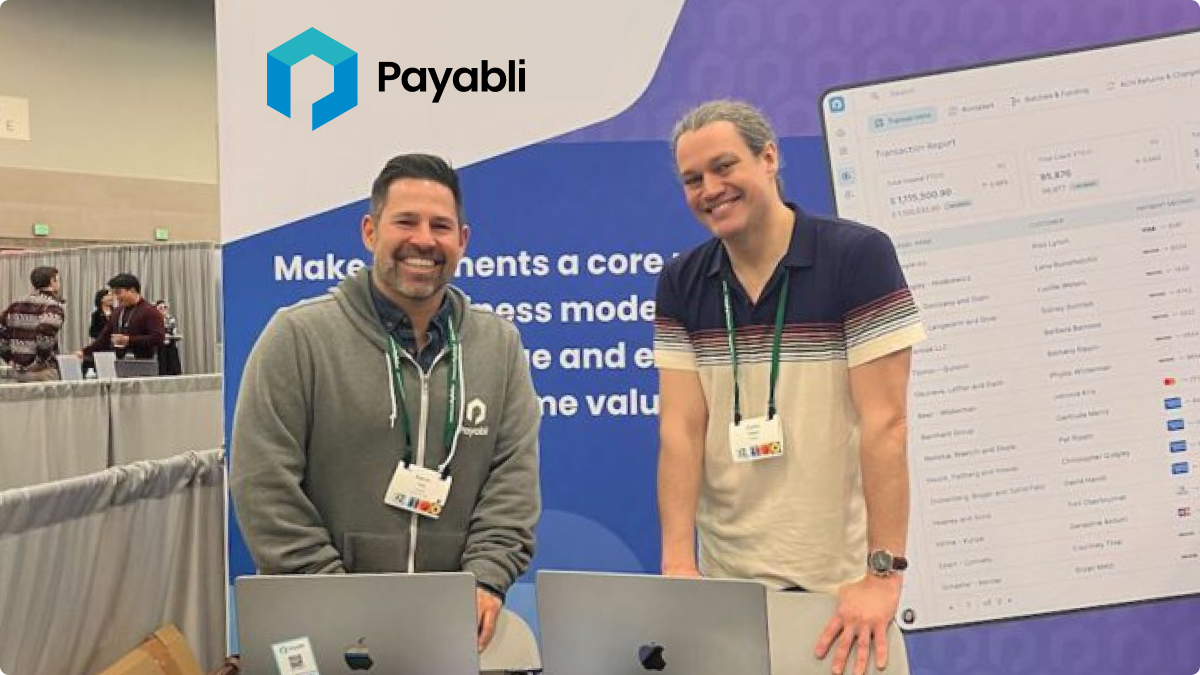
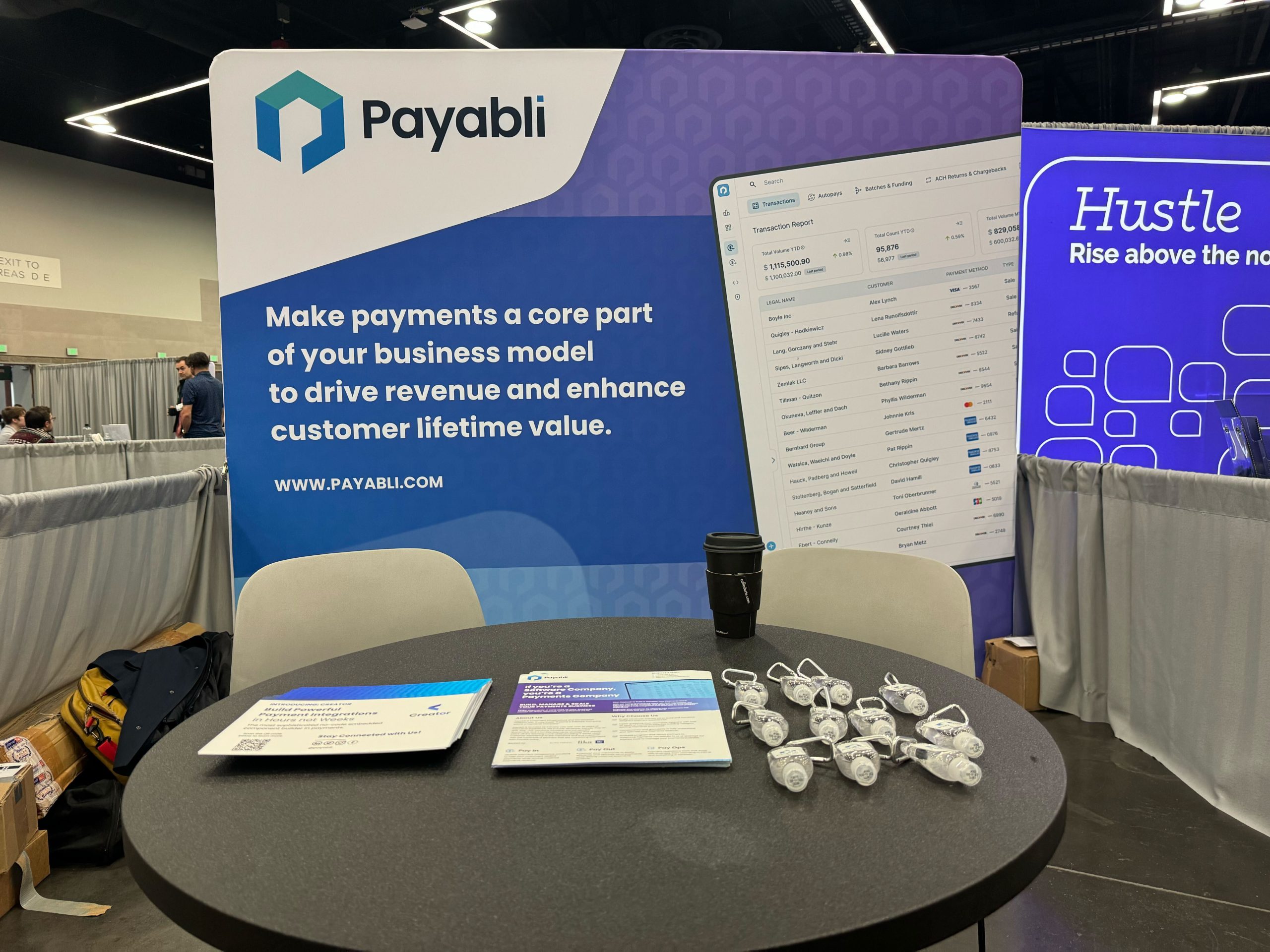
The Payabli team had the pleasure of attending and sponsoring the NTEN (Non-Profit Technology Conference) in Portland, Oregon for the second year in a row. We interviewed our payment experts Aaron Vela and Collin Haberl who attended the event this year and met many amazing non-profit organizations and members of the NTEN community.

Can you provide a brief overview of the event and what it is all about?

NTC is the Non-Profit Technology Conference. The event brings together those in the non-profit community who are looking to make the world a better place through the skillful and equitable use of technology.

The conference encourages the non-profit community to explore the latest trends in technology and Software-as-a-Service (SaaS) tools that can help enable and streamline the management of their organizations. Many technology vendors were attending, from customer-relationship management platforms (CRMs) to Grants to Payments to Marketing agencies and web development. Overall, the conference is a great opportunity to educate yourself on the entire non-profit sector in an open and communal environment.

What were some of the highlights or memorable moments from the event this year?

Aside from sharing our core competency of “every software company is a payments company” with visitors at our booth, we also enjoyed keeping tabs on attendees’ running totals of the top Skee Ball scores as our booth was positioned right across from the activities! (440 was the highest score we witnessed, by the way).

All jokes aside, one of the key themes we encountered this year during our discussions with attendees, (especially some of the CRM providers), was the misconception about the ease of integrating payments into their platforms. Historically, both fundraising platforms and CRMs have leaned on gateway providers to handle payment processing for their charitable organizations, but increasingly we found that both donor management platforms and CRMs are intrigued and exploring options to build in-house white-labeled payment solutions in order to provide a better customer experience and monetize their payments volume. This invigorated us and brought about some exciting discussions.

We also really enjoyed the happy hour events Bonterra and Pantheon hosted during the event where we had great conversations with some prospects and consultants about Payabli and payments.

Were there any notable speakers or key themes you’d like to mention?

Yes. One of the speakers we enjoyed listening to was Amber Case, Founder of Calm Technology Institute. The topic of her presentation was around the interaction between humans and technology, which we appreciated. She reinforced the importance of keeping the mindset that the development of technology should be driven by the users and not just the developers. This allows for the feedback loop to be open versus restricted to the development.

A key theme we noticed throughout the event is how much people are concerned about data and privacy online. The non-profit, donor, and CRM platforms, especially, expressed that clients who use their software are concerned about their experience using their platform.

Payabli had a booth at the show. Can you share some feedback you received from booth visitors and attendees?

We were very excited to have a booth at the show and demo our product to attendees. Overall, we received great feedback about where their heads are at when it comes to payments. We found that a lot of attendees are particularly curious about payments and how our solution differs compared to some of the legacy providers in the space.

In a lot of our conversations, organizations expressed that they have allowed their charities to bring their own payment provider on board, which quickly turns into having to juggle multiple providers over time and naturally, less control over a singular solution.

Additionally, we were psyched to hear some of this feedback post-demo from some of the booth visitors:

“We want to start with a proof of concept solution that is “plug-and-play” before going “all in” on a payments offering.”

“The timing is perfect right now because we’re currently evaluating building our own payment solution!”

“Wow, the docs are beautifully laid out, and the level of granular detail is very nice.”

“It’s cool to see the reporting mechanisms from the top down – a bird’s eye view of our entire payment ecosystem is something we never knew we could see or have offered in a single solution.”

A lot of booth visitors also really appreciated our “meet you where you are” philosophy around Tech and Operations and our process of solving a tailored implementation through connections with our team. We were very pleased around the receptiveness of our mindset of consolidation and how we provide software Partners PayIn, PayOut, and PayOps solutions in a single unified platform. They also liked to hear about our hands-on approach from guided implementation to shared service responsibility, which brought reassurance to prospective partners looking to dip their toes in the water.

Overall it sounds like this was a very successful event not only for Payabli but also for the entire NTEN community! Can you sum up your top three takeaways?

Three takeaways, or themes that were prevalent during this year’s show were:
Education, Data, and Community.

Education: It was more apparent this year than ever that the NTEN community and attendees are there to learn. This crowd is very curious and always looking for new and innovative ways to better their organization. There were over 300 sessions for attendees to go to, which shows the conference is dedicated to learning.

Data: One of the major takeaways from this year was the importance of data and its security. For us, we wanted to tie that into our conversations with attendees as it relates to payments. We highlighted how working with the right provider can help non-profit organizations crawl, walk, and run in their payments journey, while also providing the data and security measures they need to be successful.

Community: This is a wonderful community where everyone is looking to help each other. The NTC attendees are all about self-determination, educating themselves, and sharing ideas for organizational transformation. The show’s focus on advocacy and forward-thinking nature encouraged highly engaged and productive conversations.

Any final thoughts on the event?

The opportunity for growth via the use of embedded payments is alive in the non-profit sector, as the community begins to see the simplicity available from the implementation to operationalizing with the right partner.

We are really excited to attend next year’s show in Baltimore and already looking forward to having more exciting conversations with the NTEN community and its attendees. We encourage you to stay connected with our team and reach out to schedule a demo if you would like to learn more about our product.


Hosted Payment Page vs. Embedded Component – What’s the Difference and Key Benefits

In the competitive landscape of software, staying ahead means mastering your chosen verticals. One crucial aspect is integrating payments seamlessly into your system. However, the task is often daunting due to the intricate nature of embedding and operationalizing payments.

As a software platform embarking on your payment journey, you will face the challenge of creating the best and most secure payment user experience for your customers. The development required and the allocation of resources can appear complex and time-consuming. Yet, it doesn’t have to be.

Partnering with the right payment provider can streamline the process from discovery to implementation, enhancing the end-user experience for your platform. The right provider offers flexible solutions, to crawl, walk, and run depending on where your software platform is in its payments monetization journey. Hosted Payment Pages and Embedded Components are two such tools.

These solutions enable platforms to evolve from their minimum viable product (MVP) to a fully seamless payment experience. This blog will delve into the details of these options, empowering your software platform to navigate its payment journey effectively.

Hosted Payment Pages vs. Embedded Components – What’s the Difference?

  • What is a Hosted Payment Page? A Hosted Payment Page is a payment page hosted on a payment provider’s secure URL allowing an entry of payment information from your customers.
  • What is an Embedded Component? An Embedded Component is a secure container placed within your software platform’s web experience, which allows for secure entry of your customers’ payment information.

An Overview of Hosted Payment Pages

Using prebuilt options such as Hosted Payment Pages are an easy option for your software platform to offer payments. Many benefits come with choosing the Hosted Payment Page path and there is flexibility for your software platform, including:

  • Little to no coding needed: When it comes to Hosted Payment Pages, one of the main benefits for your software platform is that there is little to no coding needed. Hosted Payment Pages allow you to start monetizing payments quickly, securely, and easily. This means if you’re resource-constrained and don’t have available developers or roadmap capacity you can still begin monetizing your payments volume while buying time to build a deeper integration.
  • Security and compliance advantages: Via the Hosted Payment Page, the right provider can ensure that no sensitive data/payment information touches your system, greatly reducing the burden of compliance for your software platform.
  • Ease of integration and scalability: Hosted Payment Pages and Boarding Links are great starting points for your software platform to accept payments and board customers today while allowing you the ability to build a seamless, payments and boarding experience into your platform over time.
  • Customization: There’s a common misconception that Hosted Payment Pages and boarding forms don’t offer any customization. However, the right payment provider can make this available and offer flexible options. For example, it can be as simple as branding your payment pages with your brand’s custom colors, fonts, and logo to give it your own look and feel even if it is still hosted on your payment provider’s URL. 

An Overview of Embedded Components

Embedded Components provide a seamless experience to allow your customers to accept payments securely via a JavaScript-based collection and tokenization system embedded within your platform, protecting sensitive data and limiting your PCI Compliance scope.

Similar to the Hosted Payment Page solution outlined above, there are various benefits for software platforms that choose the Embedded Component path for payment acceptance as well as merchant boarding and advanced reporting.

  • Seamless and immersed user experience: Embedded Components provide a more native user experience ensuring your customers always stay within your platform reducing customer friction and abandonment.
  • Greater control and customization options: Your payment provider will provide you with the Embedded Component, and from there you will have the ability to customize it with all your branding needs to fit your platform’s look and feel. Any additional information you want to include is still available to you.
  • Security and compliance: Just like the Hosted Payment Pages, your payment provider should be hosting any payment information and reduce the burden of PCI compliance via the Embedded Component path. They take care of the security, you take care of the UI and branding.
  • Development and maintenance considerations: You are in control of anything that involves your Embedded Component, which boosts user experience.

Does Your Payment Provider Offer the Flexibility You Need?

Choosing the right payment provider is crucial for your software platform as you seek flexibility in your payment offering. Here are a few key things to consider when choosing your payment provider as it relates to Hosted Payment Pages vs. Embedded Components:

  • Do they offer solutions that allow you to “crawl, walk, or run” depending on your needs? The right payment provider can meet you where you are in your journey and provide flexibility with your implementation. For example, maybe your team wants to get up and running quickly so you decide to start with the Hosted Payment Page solution but eventually would like to graduate to the Embedded Component path. The right payment provider will take on a consultative approach with you and your team from the beginning, assess your software platform’s current stage and needs, and map out the proper development and implementation plan to ensure success.
  • Is your payment service provider aligned with your requirements? With the consultative approach, the right provider will have the confidence to recommend the solutions they think are best for your business. At Payabli, our team of payment experts has extensive knowledge of the intricacies of different implementation paths and use cases. While we like to give our Partners full reign of their payment journeys, we are also here to offer best practices and recommendations so that your platform is set up for long-term growth and payment success.
  • Security, compliance, user experience, and scalability: As you embed payments into your software platform, you are inherently in scope for PCI compliance by bringing payments into your ecosystem. However, working with a PCI Level 1 certified provider like Payabli, you can reduce this scope by leveraging the security built into Hosted Payment Pages and Embedded Components which will insulate you as the platform from touching any PCI-sensitive card data. This will provide a foundation for a safe and successful launch of your platform.
  • Do they offer an “all-in-one” solution and tools for optionality? From Embedded Components and Hosted Pages to a Robust WebApp and No-Code tools, it’s important to make sure you are partnering with a payment provider that provides a holistic offering that spans myriad use cases and features. 

For software platforms, integrating seamless payment solutions is paramount. By partnering with a payment provider like Payabli, platforms can streamline the process and enhance user experiences with our API-first approach.

Whether through Hosted Payment Pages or Embedded Components, platforms can swiftly adapt and scale their payments business. The key lies in selecting the right payment service provider, one that aligns with the platform’s needs and champions flexibility.

Ultimately, strategic partnerships pave the way for sustainable growth and success in the ever-evolving realm of software platforms.

Are you interested in learning more?

Speak with our payment experts to learn more about Payabli’s hosted vs. embedded payment solutions and how our team can help get you on the right path.