Category: Product

Risk as UX: Turning Risk Management Into Better Merchant Experiences

Every vertical SaaS company faces the same challenge: balancing growth with trust. As you embed payments directly into your platform, how you manage risk and fraud detection isn’t just a compliance concern – it’s a strategic choice that shapes your user experience.

When risk management becomes part of your embedded payments experience – not a barrier to it – everything accelerates. Onboarding moves faster. Merchants activate sooner. Platforms build lasting trust.

At Payabli, we believe risk is not a cost center – it’s an intelligence layer that fuels confident growth.

Our Pay Ops technology turns that intelligence into a competitive advantage – making risk visible, configurable, and actionable across the entire embedded payments journey, from onboarding to payment acceptance.

From Rules to Models: The Evolution of Risk Management

Most payment fraud detection systems start with static, rules-based monitoring – velocity checks, blocklists, or simple IP/geographic flags. Useful, but blunt. Modern risk management strategies require more intelligence.

Our Pay Ops solutions take that foundation and layers in machine learning–driven risk scoring, contextual policy orchestration, and agentic automation to transform risk from a reactive process into a proactive experience layer.

This proactive approach starts the moment a merchant within your platform signs up. By embedding intelligent risk evaluation into onboarding, SaaS platforms can verify, segment, and activate merchants confidently – minimizing fraud while maximizing flow.

Beyond Transactions: Risk Management Strategies Across the Full Merchant Lifecycle

True risk management extends far beyond authorization. Payabli embeds intelligence into every stage to facilitate continuous protection for platforms that feels seamless:

Onboarding & Underwriting: Dynamically verify business data and flag risk factors in real time. Adaptive pathways fast-track trusted merchants while escalating suspicious cases for review.

Transaction Monitoring: ML-powered scoring synthesizes velocity, geo-location, and behavioral signals into explainable risk scores that dynamically approve, hold, or block.

Payout Controls: Volume-based rules monitor ACH exposure. If payouts exceed thresholds, the system holds funds or triggers review – protecting platforms without disrupting cash flow.

Continuous Merchant Intelligence: Continuous monitoring tracks chargebacks, refunds, and exposure trends. When patterns shift, automated triggers adjust rules or prompt re-underwriting.

Together, these capabilities transform your SaaS platform into a full-lifecycle risk system – one that turns risk management into a competitive advantage by aligning it directly with user experience. 

Rules Engine, Reimagined

At Payabli, we’ve built a powerful orchestration engine that allows multiple outcomes – alert, hold, block – for every transaction. Instead of rigid “yes/no” logic, our risk model dynamically adapts to behavior, generating explainable transaction records for every decision.

That same flexibility applies during the merchant onboarding process. Risk signals inform adaptive pathways: fast-tracking trusted merchants for quick approval while automatically escalating suspicious cases for review. 

The result? Smarter protection that feels invisible. This is “Risk as UX” in action, providing protection that works quietly behind the scenes.

Customizable Risk & Onboarding Policies

Every vertical SaaS platform operates differently. Payabli lets SaaS platforms define risk and onboarding policies at the organization or merchant level – tightening controls for new or high-risk accounts while allowing flexibility for established, trusted merchants.

This contextual control transforms what’s often seen as friction into a feature. Merchants feel seen and understood, while SaaS platforms maintain the guardrails that keep ecosystems healthy. Risk and experience move in sync.

Make Smarter Decisions with Risk Scores: Context You Can Act On

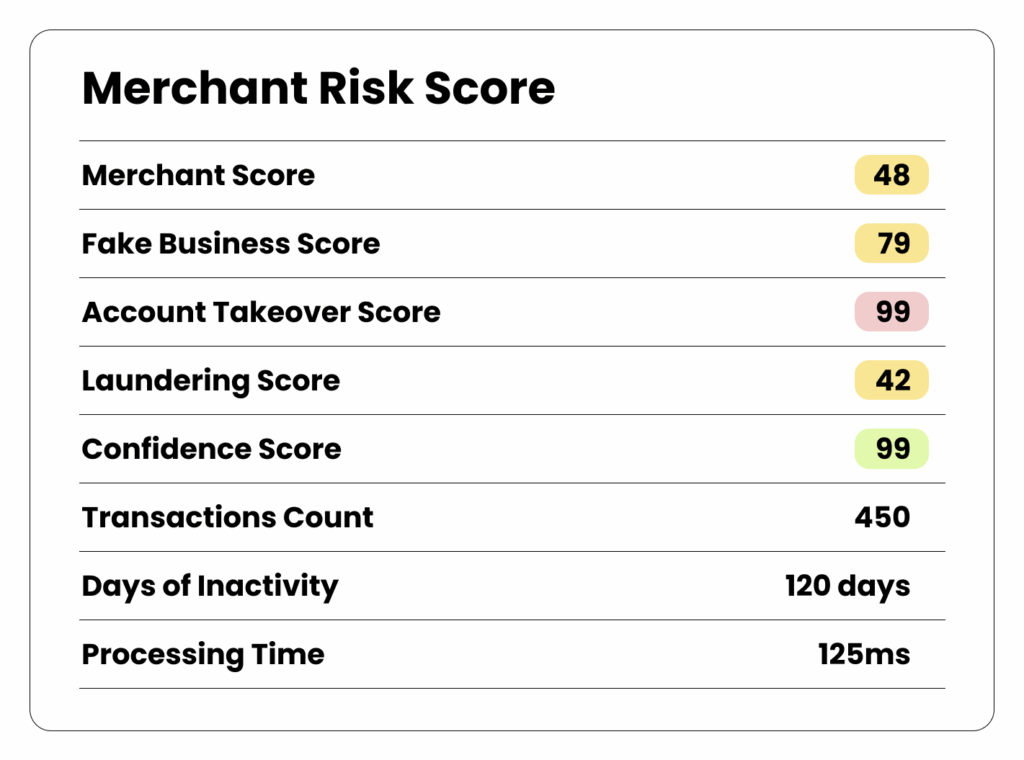
At the heart of our Payment Operations platform (Pay Ops) is our Risk Scoring Model, an advanced payment fraud detection engine that generates merchant scores and per-transaction scores to quantify potential fraud or loss.

This risk scoring approach is built from multiple layers of intelligence:

  • Transaction patterns (velocity, frequency, amount anomalies)
  • Merchant-level history (chargebacks, refunds, exposure trends)
  • Device and location signals (geo mismatch, IP diversity)
  • Behavioral and vertical data unique to each merchant’s industry

The result is an explainable, transparent score – not a black box. SaaS platforms can view sub-scores for AML risk, transaction anomalies, and fraud probability, with clear reasoning behind each outcome.

Transparency here is UX. When merchants understand why they’re being verified or approved, it builds confidence and reduces drop-off – turning compliance moments into trust moments.

Today, Payabli’s teams are shadow-scoring all transactions internally – a step toward offering these insights directly to SaaS platforms managing their own exposure and onboarding workflows.
AI-Powered Policy Creation and Triage

Managing risk across hundreds of merchants can overwhelm even the best teams – but when risk intelligence is automated, it becomes part of the experience rather than an interruption.

Payabli’s AI-driven agents continuously monitor and triage fraud alerts in real time. When potential card-testing events occur, these agents:

  • Cluster related alerts
  • Detect patterns (multiple BINs, IP variations, timing spikes)
  • Surface summarized context directly in Slack
  • Recommend actions like “hold,” “review,” or “safe to ignore”

This turns a flood of alerts into one intelligent conversation – letting human reviewers focus on what matters most. In practice, that means fewer interruptions, faster decisions, and a more seamless merchant experience from onboarding to payment acceptance.

Building the Next Layer: Risk Management as a Product

In many ways, Payabli has built its own version of Stripe Radar – but purpose-built for vertical SaaS platforms. Because our Pay Ops infrastructure is modular, platforms can decide how deeply to integrate the risk layer:

  • Base: Internal risk monitoring and fraud alerts
  • Advanced: Per-transaction risk scores and custom rule policies
  • Enterprise: Co-managed risk operations and AI-driven triage

Over time, these capabilities don’t just reduce losses – they unlock new revenue. Vertical SaaS platforms can monetize advanced merchant monitoring, loss liability protection, or transaction scoring, using Pay Ops as the engine behind it all.

Why It Matters for Vertical SaaS Platforms

Owning the full payments experience means owning the risk that comes with it – but also the trust it creates. When risk management is designed as part of the user experience, SaaS platforms can:

  • Onboard merchants faster with confidence
  • Reduce fraud losses without adding friction
  • Protect merchants through explainable, real-time risk data
  • Automate reviews to keep workflows smooth
  • Build trust through transparency and control
  • Monetize operational intelligence as a premium service

This is the future of risk management – invisible infrastructure that quietly powers exceptional experiences.

Let’s Build Your Risk Management Strategy Together

The next generation of vertical SaaS platforms will win not just by managing risk – but by embedding it into the user experience. Payabli helps you transform compliance into confidence and risk operations into growth levers. If you’re building the future of embedded payments, we’d love to help. Schedule a demo to start shaping your risk management strategy today.

Ghost Cards: Turn Vendor Payouts Into Your SaaS Platform’s Highest-Margin Revenue Stream

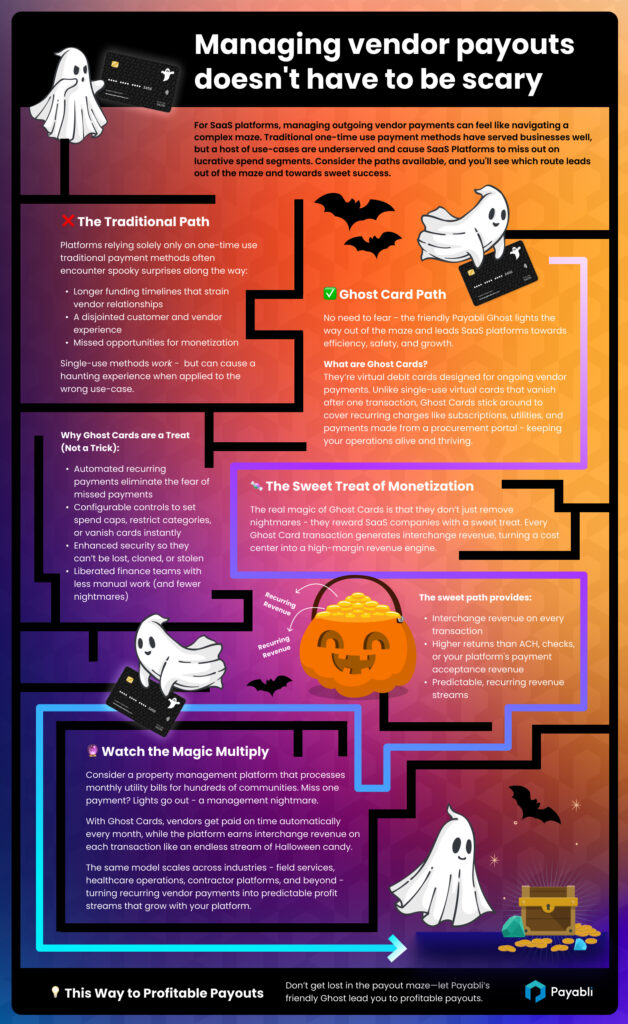
For Vertical SaaS Platforms powering embedded payments, Ghost Cards are emerging as a powerful solution to an often-overlooked challenge – the Pay Out side of the equation. While many platforms obsess over Pay In optimization—perfecting card acceptance, reducing friction, and maximizing conversion—vendor payouts frequently remain manual, fragmented, and inefficient. Ghost Cards streamline this process, unlocking automation, control, and scalability on the Pay Out side that matches the sophistication of Pay In.

But as platforms scale, this oversight becomes costly.

Fragmented payout processes create friction that frustrates customers and erodes trust:

  • Critical payments missed or delayed due to manual vendor setup errors – One data entry mistake means a contractor doesn’t get paid on time, jeopardizing your customer’s relationship with their supplier.
  • Card-on-file vendors won’t accept ACH or checks – Some vendors only accept card payments, forcing your customers to maintain multiple payment systems or lose access to preferred suppliers.
  • Payment rail mismatch sends checks or ACH to card-enabled vendors – Every mismatch between vendor preferences and your default rails creates friction, delays, and support overhead that drains resources.

These aren’t edge cases – they’re everyday realities that create support tickets, damage customer satisfaction, and leave revenue on the table.

What if you could eliminate these headaches while turning payouts into your platform’s highest-margin revenue stream?

That’s what Ghost Cards make possible.

What Are Ghost Cards?

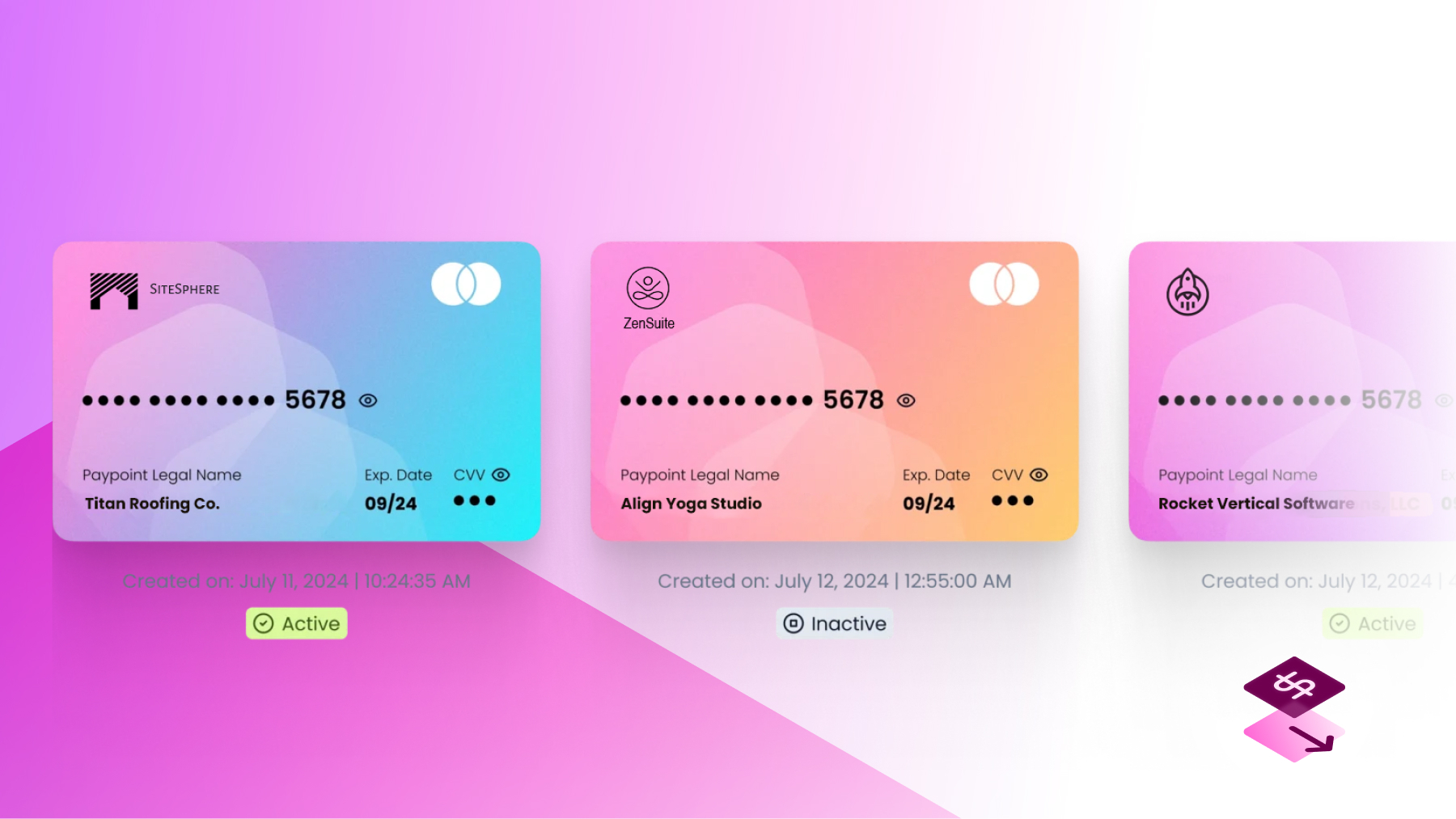
A Ghost Card is a multi-use virtual card issued to a vendor for ongoing payments. Unlike single-use virtual debit cards, Ghost Cards can be tied to specific vendor relationships – making them ideal for recurring invoices, supplier contracts, and repeat service providers.

They function like any traditional credit or debit card – only faster, safer, and fully digital.

In short: Ghost Cards let your platform issue one card per vendor, automating recurring payments while maintaining full control.

Why Ghost Cards Are a Game-Changer

Ghost Cards don’t just simplify how vendors get paid – they monetize the entire payout flow.

Because they operate on card rails, Ghost Cards generate significantly higher interchange revenue than ACH or check payments – often outperforming even your Pay In monetization.

But the advantages go beyond revenue:

  • Recurring & Multi-Use – One card per vendor makes paying repeat suppliers simple, automated, and efficient so that a critical payment (like a utility bill) is never missed.
  • Configurable Controls – Set spend limits, restrict merchant categories, and control expirations.
  • Instant Funding – Credit or good-funds models eliminate ACH delays.
  • White-Labeled – Brand every transaction with your platform’s logo.
  • Unified Reporting – Full visibility and reconciliation from your dashboard.

With Ghost Cards, platforms don’t just process payments – they control the entire payout experience.

Ghost Cards vs. Virtual Debit Cards

CategoryVirtual Cards (Single-Use)Ghost Cards (Multi-Use)
UsageOne-off vendor paymentsRecurring vendor relationships
ControlBasic (single transaction)Advanced (limits, MCC, expirations)
Vendor ExperienceOne card per paymentOne card for ongoing payments
ReconciliationHarder to match to invoicesEasier, tied to vendor account

Ghost Cards extend the capabilities of traditional single-use virtual cards – enabling automation, better visibility, and ongoing profitability.

Who Benefits Most from Ghost Cards

Ghost Cards are ideal for Vertical SaaS platforms serving industries that manage recurring vendor relationships and frequent supplier payments.

Use Cases:

  • HOA & Property Management – Pay recurring contractors like landscapers and maintenance crews.
  • Healthcare – Streamline payments to repeat suppliers for medical equipment and consumables.
  • Education – Issue recurring payments to transportation, IT, and facility vendors.
  • Field Services & Construction – Manage ongoing payments to subcontractors, materials suppliers, and rental companies.
  • And Many More – Any vertical with recurring vendor relationships benefits from Ghost Cards’ flexibility and control.

By simplifying these recurring payouts, Ghost Cards improve vendor satisfaction while driving consistent platform revenue.

Turn Recurring Payouts Into Recurring Profits

Ghost Cards give SaaS platforms a double advantage:

  • They empower businesses with faster, more secure vendor payments.
  • They unlock recurring, high-margin revenue from every payout – with significantly higher interchange revenue than ACH or check payments. 

Instead of handing off payouts to traditional banks or third-party processors, your platform becomes the hub for every transaction – earning more revenue while delivering a better vendor experience.

With Ghost Cards, payouts aren’t just a back-office process – they’re a growth engine.

Start Monetizing Vendor Payments Today

Ready to own your payout experience and maximize your revenue potential? Book a demo or talk to our team about Ghost Cards and start turning payouts into profit.

Escape the Haunted Maze of Vendor Payouts and Find the Sweet Path to Profitability with Payabli Ghost Cards

Managing vendor payouts is one of the most overlooked opportunities for SaaS platforms to drive profitability. The right payout strategy can transform operations, improve vendor relationships, and unlock new revenue streams – but only if you’re leveraging the full range of modern payment options available.

At Payabli, we offer comprehensive payout solutions to match your vertical SaaS platform’s unique needs – from traditional Virtual Card, ACH, check, and wire transfers for one-time payments, to our innovative Ghost Cards for recurring vendor payments.

Ghost Cards are multi-use, virtual debit cards specifically designed to automate ongoing vendor expenses while generating interchange revenue with every transaction. For SaaS platforms managing embedded payments, vendor disbursements, or supplier payouts, Ghost Cards turn what was once a cost center into a profitable revenue engine.

We created this fun, Halloween-themed infographic to help you navigate the payout maze. Every vertical SaaS platform faces the same choice: which payment method fits which use case? Traditional methods have their place, but for recurring vendor payments, Ghost Cards are the clear path to automation, enhanced controls, and meaningful monetization.

Download the infographic here.

Vendor Payouts: The Untapped Revenue Driver for SaaS

Vendor payouts aren’t a cost to manage – they’re a revenue opportunity to capture. By owning and monetizing payouts alongside payments, vertical SaaS companies can unlock new margins, deepen platform stickiness, and build durable competitive advantages.

Vendor payouts for SaaS platforms aren’t just an operational cost; they’re an untapped revenue opportunity. By owning and monetizing payouts alongside payments, vertical SaaS companies can unlock new margins, deepen platform stickiness, and build durable competitive advantages.

Most SaaS leaders obsess over how money flows in, optimizing checkout, reducing friction, and capturing every basis point of margin. But here’s the question few ask: are you leaving money on the table every time your platform sends money out to vendors?

When vendor payouts are treated as a back-office afterthought, outsourced through third parties and forgotten, a revenue stream quietly walks out the door. Every payout your platform processes is a transaction, and every transaction is a chance to capture margin, strengthen vendor relationships, and create a deeper competitive moat.

The SaaS platforms that recognize the power of embedded vendor payouts aren’t just cutting costs; they’re capturing new revenue streams, improving retention, and transforming how value flows through their ecosystems.

The Missed Opportunity Sitting in Plain Sight

Think about your vertical SaaS platform for a moment. You’ve built the central nervous system of an ecosystem – connecting buyers with sellers, customers with service providers, businesses with contractors. Money flows in when customers pay. But it also flows out when vendors get paid.

Most vertical SaaS companies have nailed the “Pay In” side – they’ve integrated payment processing, optimized checkout experiences, and captured the associated economics. But when it comes to “Pay Out“, the story is very different.  Most embedded payment providers don’t offer robust payout capabilities, if any at all – and most SaaS platforms haven’t even thought to ask for them.

This oversight in your payments strategy can come with significant costs: 

  • Missed revenue: Every payout is a transaction that could carry margin – often with higher returns than ACH, checks, or your platform’s payment acceptance revenue
  • Critical payments missed/delayed: Without reliable payout infrastructure, essential vendor payments can fail – meaning contractors don’t show up and suppliers cut off services. For your customers, unreliable payouts threaten operational continuity and their ability to keep the lights on.
  • Weakened user experience: Your customers expect seamless, modern payment experiences. Why shouldn’t your vendors? Disjointed payout processes create friction, reduce satisfaction, and weaken platform stickiness.
  • Loss of control: Managed payables limit flexibility in how and when payments are made, stripping SaaS platforms of valuable control in tailoring workflows to their verticals.

The bottom line? Every vendor payment is an opportunity to earn revenue, strengthen your platform, and deliver a better customer experience.

How Vendor Payments Actually Generate Revenue

Here’s what most SaaS leaders don’t realize: vendor payments aren’t just about moving money from Point A to Point B. They’re about how you move it – and each method carries its own revenue opportunity:

  1. Virtual CardsThe highest revenue generator.
    • Vendors are paid via a single-use, digital credit card number. SaaS platforms earn interchange revenue on these transactions, which can be significant. Virtual cards also deliver faster settlement and added security.
  2. ACH TransfersA balance of speed and cost.
    • ACH is often preferred for recurring vendor relationships. While margins are lower than virtual cards, SaaS platforms can still monetize ACH through per-transaction fees or premium options like same-day ACH.
  3. ChecksLegacy, but still relevant.
    •  Though less efficient, some vendors prefer checks. SaaS platforms can capture margin through check-issuance fees while meeting vendors where they are.

By offering all three methods – and capturing economics from each – you transform vendor payments from a cost center into a profit center. You generate new revenue from every dollar flowing out while giving vendors the flexibility, speed, and choice that builds loyalty.

Why Payabli Is Different

Most payment providers focus on one side of the transaction: Pay In or Pay Out. Even those that claim to do both typically treat payouts as an afterthought – just wiring funds, sending checks, or pushing an online payment – forcing SaaS platforms to give away both the economics and the experience.

Payabli was purpose-built to solve this. We unify Pay In, Pay Out, and Pay Ops under a single infrastructure stack, giving SaaS platforms full ownership of the transaction lifecycle:

  • Pay In:  Accept payments seamlessly across cards, ACH, and alternative methods with optimized conversion and modern checkout experiences.
  • Pay Out: Automated, streamlined disbursements to vendors and suppliers via virtual cards, ACH, and checks.
  • Pay Ops: The back-office intelligence that ties it all together, from reconciliation to reporting to compliance.

This unified approach doesn’t just simplify operations. It fundamentally changes your platform’s economics by letting you capture—and keep—margin on both sides of every transaction.

The SaaS Platforms That Will Win Tomorrow Are Monetizing Vendor Payments Today

The future of SaaS isn’t about building better workflow tools. It’s about becoming essential financial infrastructure. The platforms winning tomorrow won’t just help their users work—they’ll control how money moves through their entire ecosystem.

Vendor payments are how you make that shift.

When you own payouts, you’re not just adding a feature. You’re fundamentally changing your relationship with customers. You become the platform they can’t leave – because leaving means rebuilding their entire financial operation. That’s not stickiness. That’s gravity.

The question isn’t whether to own this opportunity. It’s whether you’ll act before your competitors do.

Ready To Turn Payouts Into Profit?

With Payabli, SaaS platforms finally have the infrastructure to monetize both sides of the transaction journey – turning what was once back-office plumbing into a powerful engine for growth. Book a demo today to learn how Payabli can help you capture the vendor payment opportunity before your competitors do.

Pay by SMS: The Easiest Way for Vertical SaaS Platforms to Boost Payments Revenue

In today’s competitive vertical SaaS landscape, platforms need more than just great features to win and keep customers — they need revenue-generating capabilities that create measurable impact. Pay by SMS is one of the fastest, most effective ways to do just that.

With Pay by SMS, merchants can send secure payment links directly to their customers’ phones via text message. Customers tap the link, review their invoice, and pay instantly — no logins, no apps, no unnecessary steps.

And for SaaS platforms, every fast, seamless payment means more processed volume — and more revenue.

Why Pay by SMS Is a Game-Changer for SaaS Platforms

1. Accelerate Payment Volume
When merchants get paid faster and more often, your platform processes more transactions. More transactions mean more revenue opportunities from payment processing.

2. Differentiate Your Platform
Pay by SMS adds a high-impact, mobile-first payment option that many embedded payment providers don’t offer. It’s an instant value-add for merchants who want to meet their customers where they are — on their phones.

3. Boost Merchant Retention
Merchants stick with solutions that help them get paid faster. Offering Pay by SMS gives them a reason to process payments through your platform instead of exploring alternative payment processors.

4. Simple, Flexible Deployment
Pay by SMS can be enabled quickly through Payabli’s API or embedded directly into your existing invoicing flow for minimal development effort and maximum revenue impact.

How Pay by SMS Works

  1. Send Payment Link – Merchants generate and send a secure payment link for an invoice via API or your platform’s UI.
  2. Customer Opt-In – If customers are opted in, they receive the SMS instantly. If not, Payabli automatically sends an email prompting them to enroll.
  3. Receive & Pay – Customers tap the link, review the invoice, and pay in seconds.

Value for Merchants, Revenue for You

When your merchants thrive, your platform grows. By connecting merchants and customers through Pay by SMS, you’re giving them a faster, simpler way to complete transactions — and creating more opportunities for your platform to process payments.

Benefits for your merchants:

  • Get paid faster by sending invoices directly to a customer’s phone.
  • Avoid additional logins or apps and pay instantly with a text.
  • Enhance customer experience with a fast, seamless, and secure checkout.
  • Save time by automating payment requests and opt-in workflows.

Benefits for your SaaS platform:

  • Increase payment volume to generate more processing revenue.
  • Differentiate your platform with a high-impact payment option other embedded payment solution providers may not offer.
  • Boost merchant retention by delivering tools that directly improve cash flow.
  • Deploy with ease through Payabli’s developer-friendly API or by embedding into your existing invoicing flow.

Why Partner with Payabli for Pay by SMS

Payabli is built for embedded payments, making it simple for vertical SaaS platforms to bring Pay by SMS to market quickly and securely. Our API-first architecture allows seamless integration into your existing workflows, while our compliance-first approach ensures every transaction is fully protected. The result is a frictionless deployment that delivers immediate impact.

When you partner with Payabli, you’re not just enabling another way to pay — you’re unlocking a powerful revenue engine. Value-added features like Pay by SMS helps merchants collect payments faster, driving higher transaction volume, increased processing revenue, and stronger loyalty to your platform. With Payabli, you get a partner dedicated to helping your platform grow through seamless, revenue-driving payments.

Ready to see Pay by SMS in action?

Let’s talk about bringing Pay by SMS to your SaaS platform and unlocking new revenue streams.

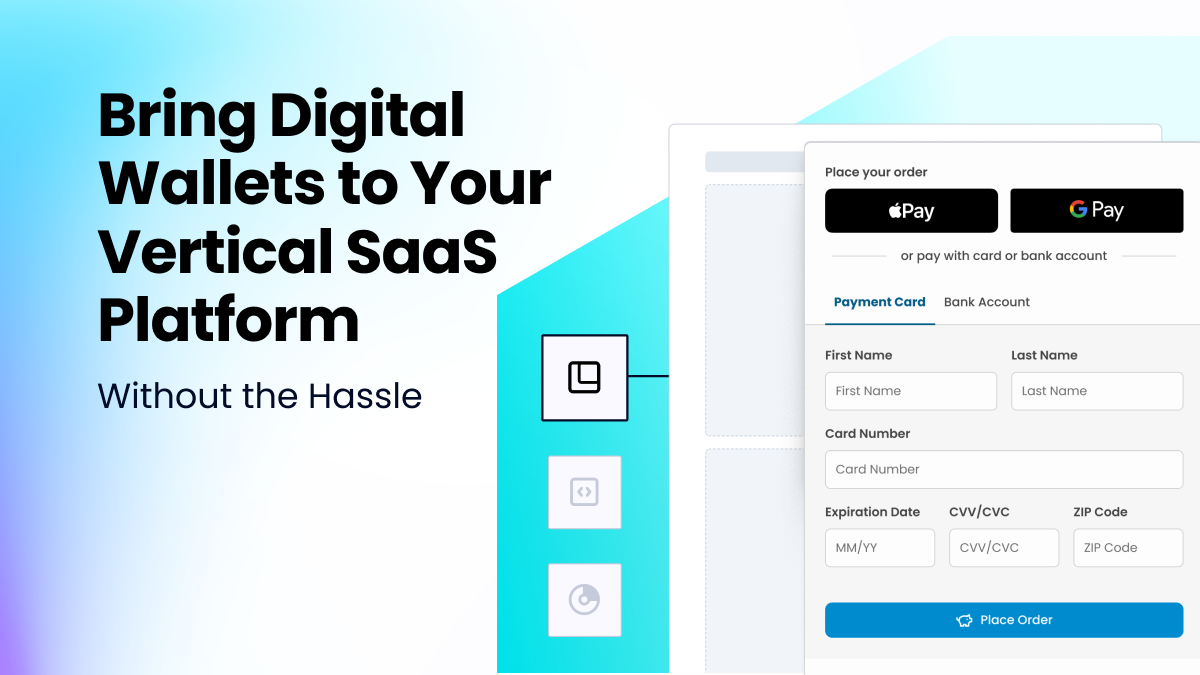
Bring Digital Wallets to Your SaaS Platform – Without the Hassle

Apple Pay and Google Pay are table stakes. But embedding them into your vertical SaaS stack? That’s where Payabli gives you the edge.

Online checkouts are evolving, and fast. Your SaaS platform’s customers and their end users expect the ability to pay with popular digital wallets like Apple Pay and Google Pay. The question is not whether your platform should support digital wallets. It is about how quickly and easily you can do this, without putting extra work on your team or delaying your roadmap.

Most providers make digital wallet integrations harder than they need to be. Payabli doesn’t.

The Invisible Work of Wallets: Why Most Solutions Fall Short

Bringing Apple Pay and Google Pay to your SaaS platform usually comes with a heavy list of technical requirements:

  • Complex key and certificate management
  • Manual merchant onboarding
  • Integration of encryption libraries
  • Custom API work and PCI-level configurations

It’s not just a checklist—it’s an obstacle course.

While others give you the tools and walk away, Payabli handles the entire digital wallet stack on your behalf. As a registered Payment Service Provider (PSP) for Apple Pay and Google Pay, we handle the hard work for you so you don’t need to build, manage, or maintain it yourself.

Think of Payabli as your digital wallet infrastructure-as-a-service—built for scale, speed, and simplicity.

Digital Wallets, the Payabli Way: A New Standard of Simplicity

Payabli is redefining what it means to support Apple Pay and Google Pay for browser-based, card-not-present transactions. Here’s how:

One Step, Platform-Wide Enablement

Activate wallets across all merchants at once, with new merchants automatically onboarded. No extra work required.

Fully Abstracted, Fully Managed

With our low-code digital wallet solution, we handle key management, encryption, tokenization, and certificate handling. This means you or your developer teams don’t have to manage burdensome configurations, libraries, or compliance tasks.

Secure & Compliant by Default

Every wallet transaction is PCI Level 1 compliant, encrypted, and tokenized out of the box. No security shortcuts, no risk of falling out of scope.

Fastest Way to Start Accepting Digital Wallets

Start accepting wallet payments in under one week with Hosted Payment Pages – no code required. Want a more integrated experience? Our low-code Express Checkout UI with embedded components gets you live in as little as two weeks.

Built-In Advantage: What PSP Status Means for You

Most solutions require the SaaS to own and operate the technical plumbing for Apple Pay and Google Pay. This includes acting as the Merchant of Record, registering for digital wallet programs, and managing cryptographic keys—none of which are fast or easy.

Because Payabli is a registered PSP of Apple Pay and Google Pay, we handle this for you.
No waiting on approvals. No merchant-specific configurations. No friction.

Your team stays focused on building products. We take care of the rest.

Get Started Today – Deliver the Checkouts Your Merchants Expect

Enabling digital wallets shouldn’t feel like a build-your-own adventure. With Payabli, you can deliver the modern, embedded payment experience your merchants want—fast, securely, and without any technical overhead.

Contact our team today to get started — or explore our developer docs to see how easy integration can be.

Remote Deposit Capture for SaaS: Modernize Check Payments

While digital payments like cards and ACH are on the rise, many businesses across industries still rely heavily on checks. Paper checks remain a common payment method across SaaS verticals like field services, property management, legal, and healthcare—yet most platforms lack the tools to manage check deposits digitally. That’s where remote deposit capture comes in: it enables businesses to scan and deposit checks electronically, streamlining a historically manual process and helping platforms modernize check acceptance alongside digital payments.

Payabli’s Remote Deposit Capture (RDC) solves this problem by embedding check scanning and depositing directly into your software platform. With RDC, your merchants can capture and deposit checks without leaving your application—improving cash flow, reducing errors, and consolidating all payment data in one place.

What Is Remote Deposit Capture?

Remote Deposit Capture is a technology that enables users to scan and deposit checks digitally using a mobile device, desktop scanner, or tablet. Instead of physically visiting a bank or relying on manual uploads, RDC streamlines the check deposit process and allows deposits to be initiated from within your software.

With Payabli’s RDC, platforms can embed this capability into their existing UI, giving merchants a faster, simpler way to manage check payments while keeping all transactions—cards, ACH, and checks—within a single system.

Benefits of Remote Deposit Capture with Payabli

Faster Deposits
Cut time-to-cash by more than 60%. Checks that once took up to 8 days to clear can now be deposited and processed in just 2–3 days.

Embedded Check Capture
Offer a seamless user experience with white-labeled check scanning built directly into your software. Merchants can capture and deposit checks using their mobile phone, desktop, or tablet.

Image Validation & Quality Assurance
Payabli’s RDC technology ensures a ~97% image acceptance rate, minimizing errors and rejected deposits through automated image validation.

Streamlined Reconciliation
Eliminate fragmented systems. Consolidate all payment data—card, ACH, and checks—into a single platform for improved financial visibility and simplified reporting.

Developer-Friendly Integration
Go live in days, not weeks. Our clean APIs, robust documentation, and pre-built UIs make it easy to embed RDC into your platform.

Flexible Monetization
Monetize RDC by marking up ACH service fees or joining our revenue share program. Control your margins and unlock new revenue streams.

Ideal Use Cases and SaaS Verticals for Remote Deposit Capture

Payabli’s Remote Deposit Capture is ideal for B2B SaaS platforms that support industries with high check volumes and field-based operations, including:

  • Field Services and Construction
  • Property Management and HOAs
  • Legal and Professional Services
  • Healthcare
  • Nonprofit

Additional Capabilities

  • White-Labeled Experience: Match your brand with customizable UI for check capture.
  • On-Site Image Capture: Enable users to scan checks instantly from their location.
  • Upcoming X9 Support: Soon support high-value business checks above $25,000 with X9 file integration.

Why Remote Deposit Capture Matters

Many SaaS platforms already use Payabli to manage card and ACH payments. However, checks are often handled outside the platform, requiring manual deposits and creating reconciliation challenges. This disconnect leads to operational inefficiencies, slower cash flow, and increased errors.

By embedding Remote Deposit Capture, your platform becomes the single destination for all payment types—delivering a better experience for merchants and giving you a competitive edge.

Get Started Today

Ready to embed Remote Deposit Capture into your platform and modernize check collection for your users? Contact our team today to get started — or explore our developer docs to see how easy integration can be.

The Power of Split Funding and Dynamic Funds Routing for Property Management and “Need to Pay” Verticals

Horizontal payment processors have served software platforms for years but lack flexibility critical to certain key verticals. Enter split funding and dynamic funds routing. In this blog, we’ll explore how split funding and dynamic funds routing transform payment processing for software platforms serving key “Need to Pay” verticals like Property Management. From flexibility to facilitating complex payment management, we’ll uncover the benefits and their impact on digital commerce.

Understanding Split Funding and Dynamic Funds Routing

  • What is Split Funding and Dynamic Funds Routing? This is the process in which a software platform that is processing payments can split a transaction and have it deposited into multiple merchant accounts or on their behalf.

Split Funding and Dynamic Funds Routing: Benefits for Software Platforms 

When it comes to split funding and dynamic funds routing, there are multiple benefits software platforms will see when working with the right payment provider.

Never co-mingle funds again. With split funding and dynamic funds routing your software platform can avoid the co-mingling of funds. Co-mingling of funds typically refers to the mixing or pooling of funds from multiple transactions or sources into a single account but also consolidating different funds sourced for different purposes. For certain verticals, this provides superior user experiences while remaining compliant, while the co-mingling of funds is highly discouraged.

By eliminating the co-mingling of funds, your platform will avoid:

  1. Accounting Challenges: WIth traditional payment processing providers, all your transactions occur within a basic merchant account and among daily batches of transactions. This means that funds get routed to one or two bank accounts with limited control over how they get settled, inadvertently mixing funds from different sources. This makes it difficult to track individual transactions or understand the origin of specific settlements within your clients’ bank accounts.
  2. Compliance Headaches: Depending on the jurisdiction and industry, there may be regulations or legal requirements governing the segregation of funds, particularly when handling transactions on behalf of others (e.g., customers or clients).
  3. Lack of Transparency: Maintaining records of all your transactions from your customers coupled with keeping track of funding transfers, payments to your software companies, and other bills in bank accounts places an undue burden on businesses. This can be a nightmare operationally and may even require you to leverage third-party tools to just make sense of it all.

Additionally, split funding and dynamic funds routing allow software businesses to optimize for:

  • Improved customer experience: ensuring timely and accurate payments, increasing customer experience within your platform as it relates to payments, and the splitting of funds overall.
  • Increased compliance and transparency: facilitating adherence to financial and compliance regulations and providing clear records for auditing.
  • Ease of payment management: simplifying reconciliation and reporting, eliminating the need to track individual transactions across multiple accounts. Working with the right payment provider offers a streamlined approach that not only saves time and resources for software platforms but also improves accuracy and transparency, enhancing the platform’s financial visibility and control of all transaction details in one centralized view.

Which SaaS Industries Can Benefit From Split Funding and Dynamic Funds Routing?

Certain SaaS industries significantly benefit from utilizing split funding, specifically to eliminate the co-mingling of funds. One key industry is the HOA software industry. For example, if you are operating as an HOA software company, you are responsible for all of the individual HOA management companies under you, who are responsible for collecting all of their homeowner payments and fees. When the HOA management companies under your platform receive payments from the homeowners, they need to ensure there is no co-mingling of funds that eventually flow through as transactions via your platform. For example, a homeowner may pay an HOA management company under your platform for renting out the pool area at their building but also pay a fee for re-paving the roads at the HOA community. If both of those transactions settle into the same pool, this would be considered a co-mingling of funds. Co-mingling funds in HOA software platforms is highly discouraged to ensure financial transparency, comply with legal requirements, and prevent fraud. Keeping funds separate simplifies accurate accounting, reporting, and auditing while reducing liability and maintaining homeowner trust.

Streamlining Payment Management & The Power of Working with the Right Payment Provider

Payabli empowers software platforms to optimize their payment processing, drive revenue, and boost customer satisfaction with a unique payment feature set that is fully integrated and baked into each platform’s product experience. Unlike many payment providers in the space, Payabli offers robust split funding capabilities, setting up each customer on your platform with the appropriate amount of merchant accounts and ensuring the correct funds routing to eliminate the co-mingling of funds. This allows you to process transactions securely and compliantly, routing funds to different bank accounts while seamlessly reconciling split funding through comprehensive transaction and settlement reporting APIs and UIs. Our team provides the tools to direct and split funds according to your unique business needs, ensuring compliance and enhancing user experience.

To see how these innovations can revolutionize your software platform’s payment processing, we invite you to watch our video on split funding and dynamic funds routing.

Interested in learning more? Schedule some time to chat with one of our payment experts. We’ll show you how our API-first payment solution can empower your business to build seamless payment experiences.


What is Payment Tokenization and How Can it Enhance Security for Your Software Business?

Security in payment transactions is crucial for software businesses, and payment tokenization offers an innovative solution to this challenge. As we mentioned in our previous blog, there are multiple types of tokenization including standard, multi-use, and network tokenization. Each can benefit a software business’s unique use case and play a crucial role in its payment strategy.

In this blog we take a step back to explore the fundamentals of payment tokenization, why it matters for software businesses, its role in safeguarding sensitive payment data, and its impact on transaction security. We also emphasize the significance of partnering with the right payment provider for seamless and secure token migrations, ensuring a smooth experience for software businesses and their customers.

What is Payment Tokenization?

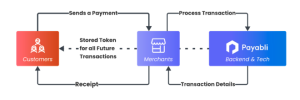
Payment tokenization involves replacing sensitive payment data, such as credit card numbers or bank account details, with randomly generated tokens. These tokens are used to facilitate secure transactions without exposing actual payment information. When a customer initiates a transaction, the payment system generates a token representing that information instead of transmitting their payment information, such as credit card or bank account details. This token is then passed through the payment process and stored in your business’s payment platform for future usage. If the token were intercepted, it would be rendered ineffective for use by unauthorized individuals or hackers, because it does not contain any sensitive data. The diagram below shows how payment tokens work for software businesses and their customers, and how the payment platforms’ backend tech, such as Payabli helps facilitate the payment tokenization process.


Why Does Payment Tokenization Matter for Software Business?

For software businesses, payment tokenization enhances security by reducing the risk of data breaches and fraud. It allows them to handle payment transactions without storing sensitive data, thus minimizing liability and compliance requirements. Additionally, payment tokenization enables software businesses to offer their customers a safer and more secure payment experience, which can enhance trust and loyalty.


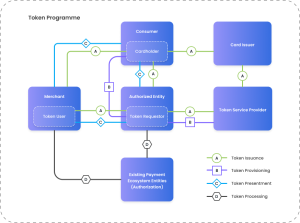
Graph from EMV Co

Exploring Different Types of Payment Tokens

There are three generally well-known forms for tokens:

Traditional Payment Tokens: These tokens are generated by replacing sensitive payment card details such as credit card numbers with a randomly generated string of characters. Many PCI-certified gateways and processors have enabled this functionality for many years. Since they are managed by your payment service provider, they tend to be the easiest and cheapest method to manage recurring payments.

Device Tokens: Device tokens are associated with specific devices, such as smartphones or smartwatches, and are used in mobile payment systems like Apple Pay, Google Pay, or Samsung Pay. Instead of using the primary account number, the payment system generates a unique token tied to the device’s secure element or software.

Network Tokens:  Unlike traditional tokens or device tokens, which are generated by merchants or payment processors, network tokens are created and managed by the card networks themselves. These tokens can be automatically updated since they are linked to the issuer and network if a change occurs.

Payment service providers like Payabli work with all three of these modalities to provide a convenient and secure payment processing experience for our software Partners.

That Seems Too Easy… What’s the Catch? And What Does This Mean For Software Businesses?

As mentioned above, traditional tokens are stored with either the gateway or processor. This means those platforms are managing the token lifecycle on behalf of customers and thus control the flow of that data. If a merchant or software provider (ISV) had to switch to a new gateway or processor, they would have to migrate all those saved tokens or even risk losing them all. Not having access to those tokens could have a massive impact on the merchant’s ability to process transactions and could affect their business operations overall.

There are two key factors that software platforms need in order to save their clients from this grief:

  1. Token Portability: When working with a provider that processes your payments, make sure you can migrate your tokens to a new provider.
  2. Token Migration: When you select a new payment service provider, it is important to ensure they can handle token migrations. Are they PCI-compliant and do they have a formal process to ingest the token information securely?

How does Payabli Do it Better?

Migrating a token may sound simple but it tends to be fraught with error. At Payabli, our team of payment experts has spent a significant amount of time normalizing data from the largest players in the payments space to ensure that migrations work smoothly for software businesses. You can see in the diagram below how the token migration process works within our technology ecosystem.


Moreover, we have automated the process, which often takes 2-3 weeks with other payment providers, down to a one-day process.

Here’s how we help facilitate the token migration process in a timely and secure manner:

  • We set secure file transfer protocol (SFTP) inboxes for our clients to deliver the information
  • We have built proprietary tools to standardize the formats from big payment service providers in the industry
  • We automatically decrypt the files and extract all the information
  • We create Payabli tokens for our merchants to be able to process transactions immediately

Conclusion

In conclusion, payment tokenization stands as a cornerstone of modern transaction security for software businesses, providing a robust shield against data breaches and unauthorized access. By adopting this technology, businesses not only safeguard sensitive payment data but also enhance the trust and confidence of their customers. Partnering with the right payment provider, such as Payabli, further amplifies these benefits through efficient token migrations and management, ensuring that the payment process remains seamless and secure. Payabli not only simplifies compliance with PCI standards but also equips businesses with the tools necessary for handling complex token migrations effectively. Therefore, embracing payment tokenization is not just about adopting new technology—it’s about investing in the future of secure, reliable, and customer-centric digital transactions.

Interested in learning more? Our team of payment experts would love to chat. Schedule a demo here.


ACH & ACH Returns: Everything Your SaaS Business Needs to Know

In the dynamic landscape of digital transactions, it’s crucial for businesses, especially Software as a Service (SaaS) companies, to stay abreast of various payment methods and their associated processes. One payment method that holds significant importance is Automated Clearing House (ACH) transactions.

Understanding what ACH is, how ACH works, as well as subsequent processes like ACH returns is fundamental for SaaS businesses to efficiently manage their finances and maintain customer satisfaction.

What is ACH?

ACH (Automated Clearing House) is a network in the United States for electronic payments and transfers between bank accounts, facilitating transactions such as consumer transactions, direct deposits, and bill payments. It offers a more efficient and cost-effective alternative to traditional paper-based methods like checks.

How does ACH Work?

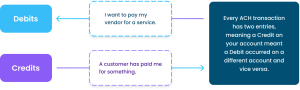
The ACH rail supports pushing and pulling funds from a US Bank Account. This means it can be used for purchases, payroll, and pretty much any use case as long as you have an originating and receiving bank account on either side of the request. See the diagram below.


What is an ACH Return?

An ACH return is a process where an ACH transaction is sent back to the originating bank by the receiving bank. There are several reasons why an ACH transaction may be returned, including insufficient funds, invalid account numbers, incorrect information, or issues with the account holder’s authorization. When a transaction is returned, the funds are not transferred and the payment is considered unsuccessful. It is important for businesses to understand with ACH returns that just because you set up a payment, doesn’t mean it is completed.

  • What is the Flow of the ACH Return Once It Has Been Initiated? (AKA how do ACH returns happen?)


  • Once initiated and depending on the return code, a return can take 2 banking days to up to 60 calendar days to process.

Why ACH Returns Matter for SaaS Businesses?

With ACH returns, the RDFI is responsible for initiating the return entry or the return for the total amount of the original payment (partial returns are not permitted).

ACH returns not only incur fees and lose revenue for merchants but also endanger a merchant’s ability to use ACH payments. If a merchant incurs too many ACH returns, their ability to use the ACH network can be revoked altogether.

There are other implications around ACH Returns for SaaS businesses, including:

Cash Flow Management: ACH returns can disrupt cash flow for SaaS businesses, especially those operating on subscription-based models. Failed payments mean delayed revenue, which can impact budgeting, forecasting, and overall financial stability.

Customer Experience: Payment failures can result in customer dissatisfaction and churn. For SaaS businesses, where customer retention is paramount, failed transactions due to ACH returns can damage relationships and erode trust. Customers expect seamless payment experiences, and frequent returns can tarnish a company’s reputation.

Compliance and Risk Mitigation: Understanding ACH regulations and compliance requirements is crucial for SaaS businesses to mitigate risk and avoid potential penalties. Non-compliance with ACH rules can lead to fines and legal consequences. By proactively managing ACH returns and adhering to industry standards, businesses can reduce compliance risks.

Operational Efficiency: A high volume of ACH returns can strain operational resources as businesses need to investigate and resolve payment issues promptly. Implementing efficient processes and leveraging the right payment solutions for ACH management can streamline operations and reduce the administrative burden associated with returns.

How Can SaaS Businesses Address ACH Returns?

Partnering with the Right Payment Provider: Utilize a payment provider that offers robust ACH processing capabilities and built-in features for managing returns. These platforms often provide monitoring, reporting, and automated retry mechanisms to help minimize returns.

Data Verification and Validation: Implement account verification processes to ensure the accuracy of customer information before initiating ACH transactions. Validating account details can reduce the likelihood of returns due to incorrect or incomplete data.

Communication and Notification: Maintain transparent communication with customers regarding payment failures and ACH returns. Promptly notify customers of any issues and provide clear instructions for resolving payment discrepancies to mitigate dissatisfaction and preserve relationships.

Risk Assessment and Fraud Prevention: Implement risk assessment protocols to identify and mitigate potential fraud risks associated with ACH transactions. Utilize fraud detection tools and monitoring systems to detect suspicious activity and prevent unauthorized transactions.

In conclusion, ACH transactions and ACH returns play a significant role in the payment ecosystem, particularly for SaaS businesses reliant on recurring revenue streams. By understanding the fundamentals of ACH, actively managing returns, and implementing best practices for ACH processing for PayIn, SaaS companies can enhance cash flow, preserve customer relationships, and ensure compliance with regulatory requirements, ultimately driving long-term success in the digital economy. There are other implications as it relates to ACH for PayOut, which we will cover in more detail in a future blog post.

Looking to learn more about how Payabli helps SaaS companies like yours better handle ACH and ACH Returns? Schedule some time to speak with one of our Payment Experts.